
ChatGPT went from research demo to more than 900 million weekly users in a little over three years, and 44% of American adults now use it. OpenAI’s annualized revenue run rate reportedly passed $40 billion by August 2026, and its March 2026 funding round valued the company at $852 billion. In the ChatGPT statistics below, where a 2023 benchmark has been overtaken, the old number stays next to the new one so you can see the distance traveled.
On this page
- How Many People Use ChatGPT?
- Who Uses ChatGPT and What For
- ChatGPT Traffic, App, and Market Share Statistics
- ChatGPT Revenue and Subscriber Statistics
- OpenAI Valuation and Funding Statistics
- How Businesses Use ChatGPT
- ChatGPT Product and Model Statistics
- Key Takeaways
- Frequently Asked Questions
- Sources and Methodology
How Many People Use ChatGPT?
ChatGPT Weekly Active Users Over Time
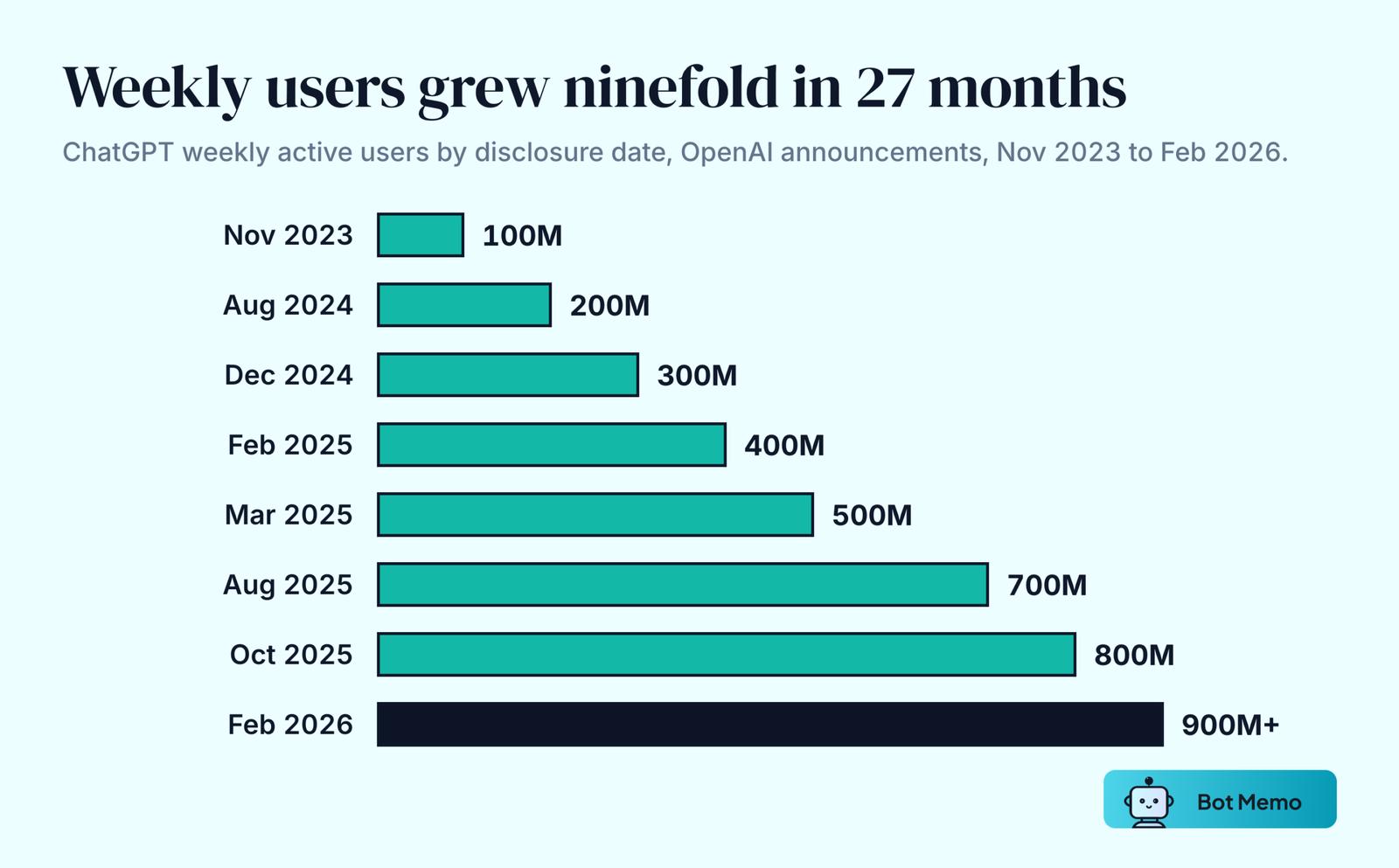
1. ChatGPT reached 100 million weekly active users by November 6, 2023, a milestone Sam Altman announced at OpenAI’s first DevDay. (OpenAI)
2. ChatGPT hit 200 million weekly active users by August 29, 2024, per an OpenAI statement. (OpenAI)
3. Weekly active users reached 300 million by December 4, 2024, per Altman in a public interview that day. (Sam Altman)
4. ChatGPT passed 400 million weekly active users in February 2025, confirmed by an OpenAI spokesperson. Paying business users crossed 2 million at the same time. (OpenAI)
5. OpenAI referred to “the 500 million people who use ChatGPT every week” in its March 31, 2025 funding update. (OpenAI)
6. Nearly 700 million people were using ChatGPT every week as of August 7, 2025, the day GPT-5 shipped, and OpenAI’s own study of how people use the product put the figure at 700 million. (OpenAI)
7. More than 800 million people were using ChatGPT every week as of October 6, 2025, per Altman’s DevDay keynote, which also disclosed 4 million developers building with OpenAI and over 6 billion API tokens processed per minute. (OpenAI)
8. OpenAI reported more than 900 million weekly active users on February 27, 2026, alongside its $110 billion funding announcement. That is its most recent explicit weekly figure. (OpenAI)
9. On July 31, 2026, OpenAI said its models reach more than 1 billion active users and more than 2 million businesses. The company attached no weekly or monthly basis to that number, and it spans OpenAI’s products rather than ChatGPT alone. (OpenAI)
10. The ChatGPT app passed 1 billion monthly active users in May 2026, roughly three years after launch and faster than Google Maps, TikTok, Instagram, or YouTube reached the mark, per Sensor Tower estimates. (Sensor Tower)
11. Reporting in late July 2026 that cited internal company data put weekly users close to 1 billion. OpenAI has not confirmed a 1 billion weekly figure. (Press reports, unconfirmed)
ChatGPT Daily Usage and Message Volume
12. ChatGPT users sent about 2.6 billion messages a day in June 2025, up from 451 million a day in June 2024, per OpenAI’s Economic Research team. (OpenAI)
13. People who have used ChatGPT for six months send 50% more messages each day and use it for twice as many kinds of work, OpenAI said in July 2026. (OpenAI)
14. About 24% of US adults use an AI chatbot every day, including 12% who use one several times a day, per Pew Research Center’s February 2026 survey. ChatGPT is the most used chatbot in that survey by a wide margin. (Pew Research Center)
How Fast ChatGPT Grew at Launch
15. ChatGPT gained 1 million users within five days of OpenAI’s November 30, 2022 launch, faster than TikTok, Spotify, or Instagram reached the same mark. Altman posted the milestone on December 5, 2022. (Statista, Sam Altman)
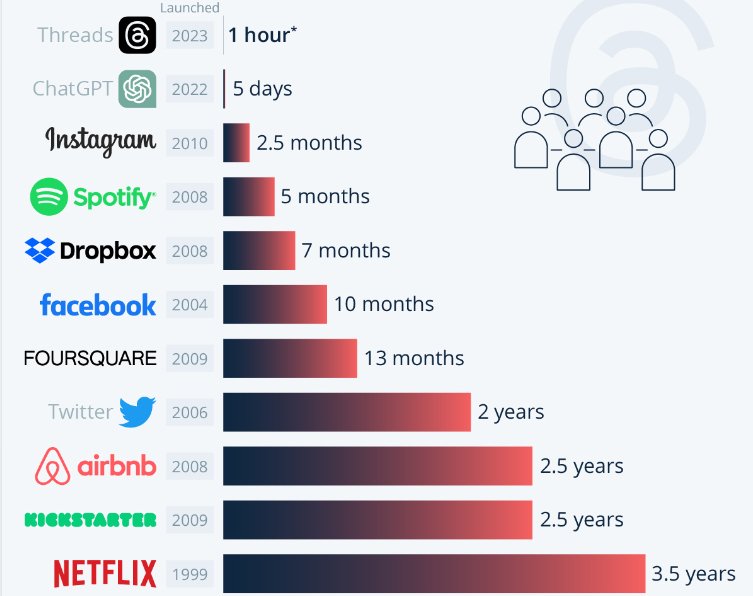
16. During the image generation surge of March 31, 2025, Altman wrote that OpenAI had “added one million users in the last hour.” (Sam Altman)
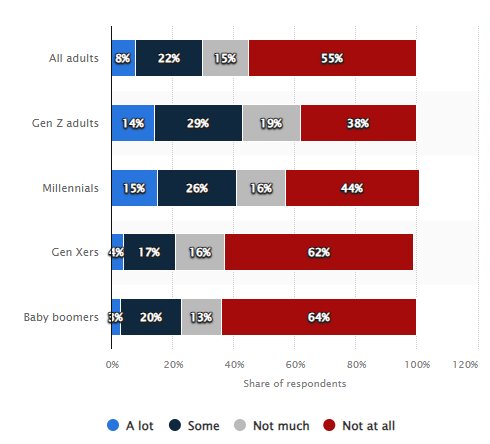
17. In a Statista survey published February 2023, only 8% of American adults said they had heard a lot about ChatGPT, and another 22% said they had heard some. By generation, 14% of Gen Z, 15% of millennials, 4% of Gen X, and 3% of Boomers had heard a lot. (Statista)
18. A 2023 Statista survey on familiarity with generative AI put the share of US adults who knew of tools like ChatGPT at around 40%. (Statista)
Who Uses ChatGPT and What For
ChatGPT Adoption in the United States
19. 44% of US adults use ChatGPT, per Pew Research Center’s Americans and AI 2026 report, published June 17, 2026 from 5,119 adults surveyed February 17 to 23, 2026. (Pew Research Center)
20. That share has more than doubled in three years: 18% in 2023, 23% in 2024, 34% in 2025, and 44% in 2026. Pew notes the 2026 question sat inside a broader chatbot battery, so the latest step is not perfectly like for like. (Pew Research Center)
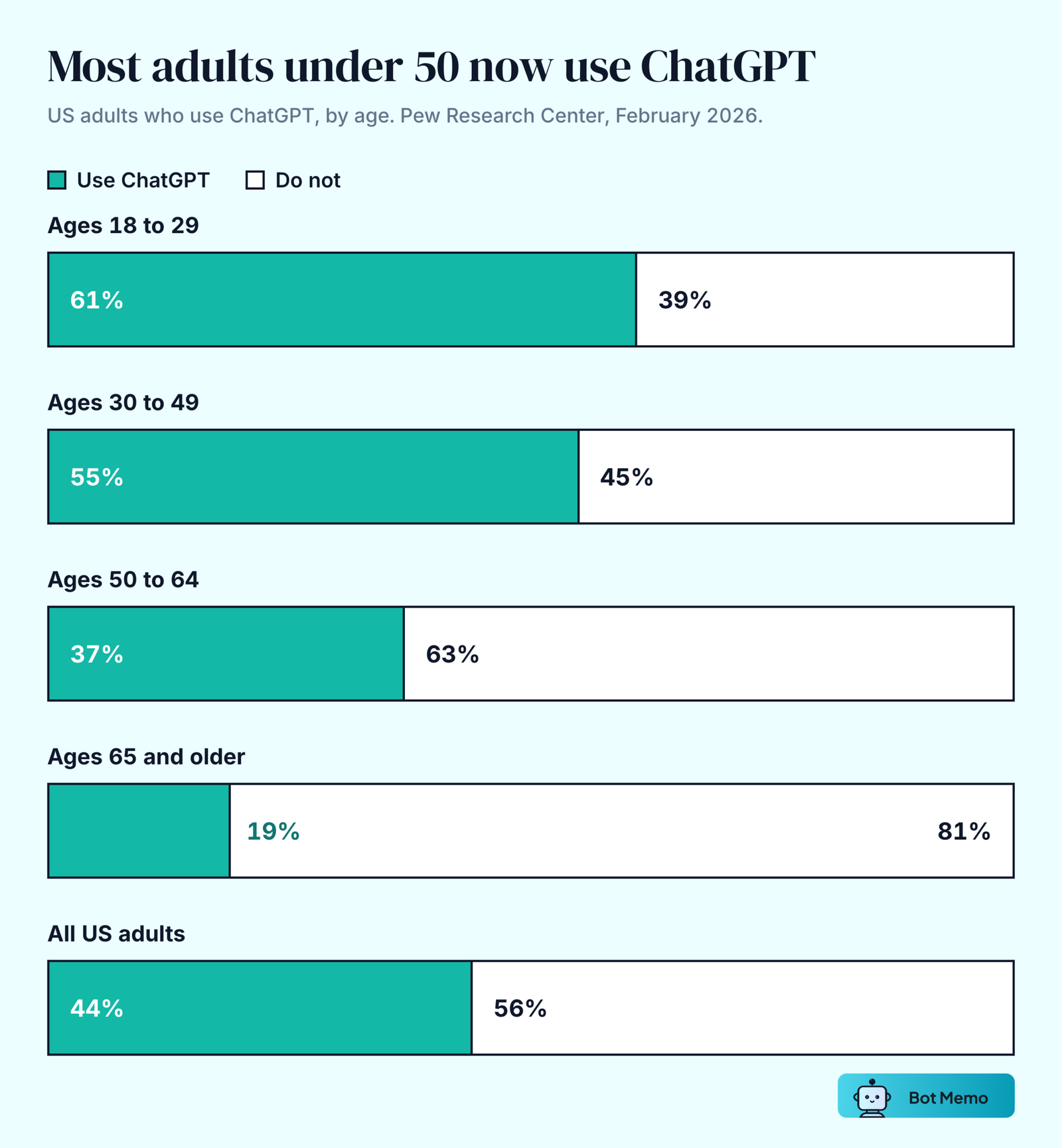
21. By age in 2026, 61% of adults 18 to 29 use ChatGPT, against 55% of those 30 to 49, 37% of those 50 to 64, and 19% of those 65 and older. (Pew Research Center)
22. The under-30 share was 58% in Pew’s 2025 survey of 5,123 adults, fielded February 24 to March 2, 2025. It rose to 61% a year later. (Pew Research Center)
23. 49% of US adults use at least one AI chatbot. Behind ChatGPT come Gemini at 24%, Copilot at 17%, Meta AI at 14%, Grok at 8%, and Claude at 6%. (Pew Research Center)
24. 59% of US teens have used ChatGPT, more than double the next chatbot (Gemini at 23%, Meta AI at 20%), per Pew’s survey of 1,458 teens fielded September to October 2025. (Pew Research Center)
25. 28% of employed US adults said in 2025 that they use ChatGPT for work. (Pew Research Center)
ChatGPT Adoption Around the World
26. Weekly generative AI use nearly doubled year over year, from 18% to 34%, across six countries surveyed by the Reuters Institute in 2025, and ChatGPT was the most widely used system in every one of them. (Reuters Institute)
27. Weekly use of AI chatbots such as ChatGPT specifically to get news rose from 7% to 10% globally in the Reuters Institute’s Digital News Report 2026. (Reuters Institute)
ChatGPT User Demographics Then and Now
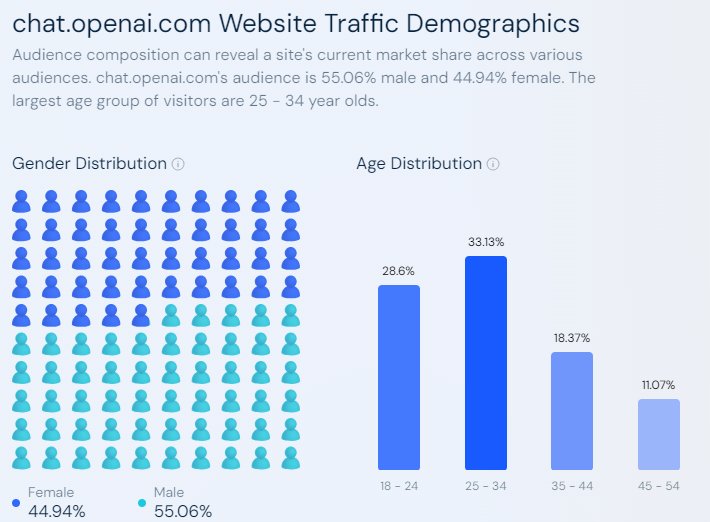
28. A 2023 Similarweb snapshot put men at 55.06% of ChatGPT’s web traffic and women at 44.94%. A separate 2023 Statista dataset put the global split at 65.5% men and 34.32% women. (Similarweb, Statista)
29. The same snapshot showed 25 to 34 year olds as ChatGPT’s largest age group at 33.13% of traffic, with 18 to 24 year olds at 28.6%, 35 to 44 year olds at 18.37%, and those 45 and older at about 20%. (Similarweb)
30. The gender gap has since closed. Users with typically feminine names grew from about 37% of active users in January 2024 to roughly 52% by mid-2025, per OpenAI’s study of 1.5 million conversations. (OpenAI)
31. In that study, about 46% of messages from users who disclosed their age came from 18 to 25 year olds. (OpenAI)
32. In a 2023 Savanta survey of over 1,000 Americans, 40% used ChatGPT for fun or education, and millennials led business use at 42% (Gen Z 29%, Gen X 26%, Boomers 20%). (Savanta)
33. In the same survey, 55% of users had run into access problems at peak hours, rising to 66% of Gen Z respondents, and 50% of Boomers who hit a problem said the language was too hard to understand. 74% said they believed the chatbot would improve existing technology. (Savanta)
34. Looking ahead, 59% of men in the Savanta survey said they could see themselves using ChatGPT to explore new technology, 37% of Gen Z said they would use it for fun, and only 15% of Boomers saw themselves using it for business. (Savanta)
35. A 2023 Statista survey found 8.2% of global employees had tried ChatGPT at work, and 3.15% had entered confidential business information into it. (Statista)
ChatGPT Use Cases: What People Use It For
36. Non-work messages rose from 53% of ChatGPT traffic in June 2024 to 73% by June 2025, so personal use grew faster than work use even as total volume climbed. (OpenAI)
37. Practical guidance, information seeking, and writing account for nearly 80% of all ChatGPT conversations. Practical guidance is the largest single category at about 29%. (OpenAI)
38. Writing fell to 24% of overall usage from 36% a year earlier, but it remains the leading work use at 40% of work-related messages. (OpenAI)
39. Sorted by intent, 49% of messages ask for information or advice, 40% ask ChatGPT to do a task, and 11% are self-expression. (OpenAI)
ChatGPT Traffic, App, and Market Share Statistics
ChatGPT Web Traffic in 2025 and 2026
40. ChatGPT recorded an estimated 5.85 billion web visits in August 2025, its record month at the time, and 5.72 billion in January 2026, per Similarweb. (Similarweb)
41. ChatGPT captured an estimated 46.59 billion visits over twelve months, 48.36% of all AI tool web traffic and up 106% year over year, per OneLittleWeb’s August 2025 study of more than 10,500 AI tools. (OneLittleWeb)
42. ChatGPT has ranked #1 on both web and mobile in every edition of Andreessen Horowitz’s Top 100 Gen AI Consumer Apps. In the sixth edition, published March 2026, it was 2.7 times larger than Gemini on web traffic and 2.5 times larger on mobile monthly users. (a16z)
ChatGPT App Downloads and Mobile Revenue
43. ChatGPT became the fastest app ever to reach 1 billion global downloads, hitting the mark in July 2025. (Sensor Tower)
44. ChatGPT passed TikTok to become the world’s most downloaded app in Q2 2025. Across the full year it ranked second worldwide by downloads, per Sensor Tower’s State of Mobile 2026. (Sensor Tower)
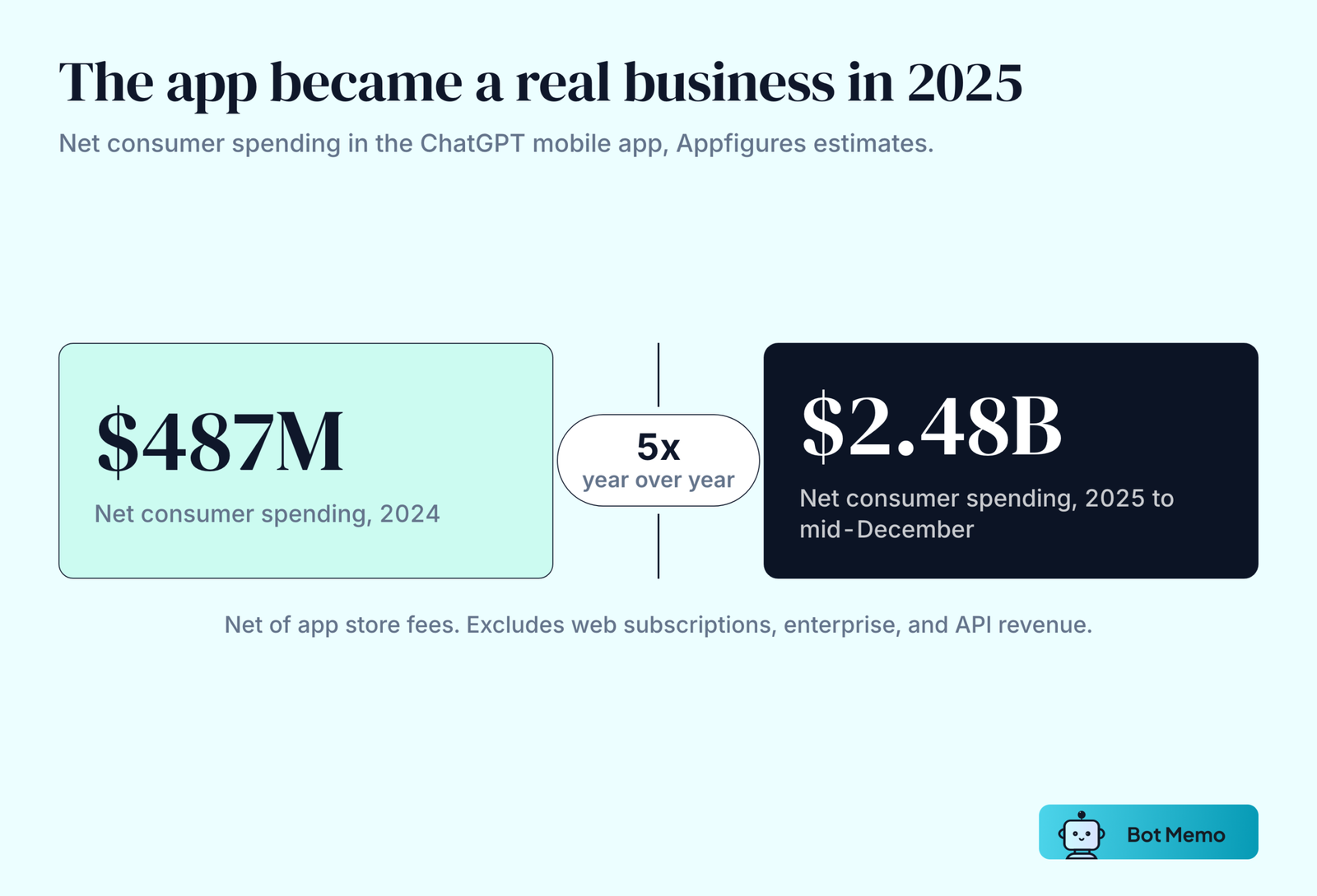
45. The ChatGPT mobile app crossed $3 billion in cumulative consumer spending by December 2025. The figures are net of app store commissions and exclude web subscriptions, enterprise contracts, and API revenue. By mid-2026, roughly three years after launch, cumulative spending passed an estimated $5 billion, faster than any other non-game app to reach that mark since 2017. (Appfigures)
46. Consumers spent an estimated $2.48 billion in the ChatGPT app in 2025 through mid-December, up 408% on the $487 million spent in all of 2024. (Appfigures)
47. The app’s best months on record: an estimated $338 million in net consumer revenue in December 2025 and 56 million downloads in January 2026. (Appfigures)
48. Spending kept climbing in 2026, to an estimated $1.3 billion from January through April, up 121% on the same months of 2025. (Appfigures)
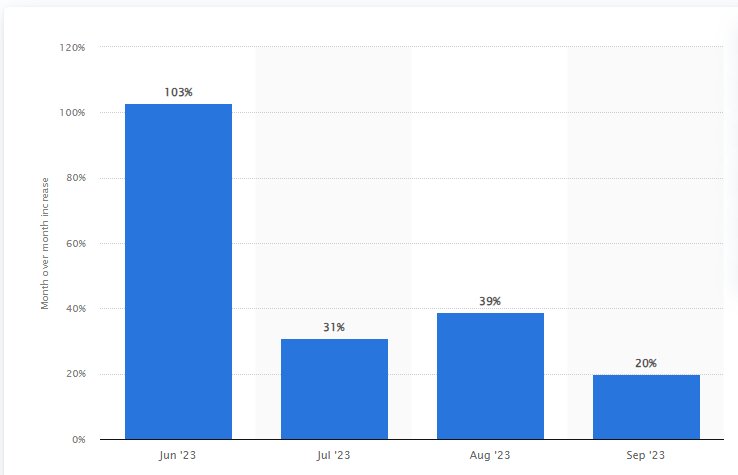
49. OpenAI’s mobile app revenue rose about 40% between July and August 2023, within months of the app’s May 19, 2023 US launch, and it earned about 20% more in September 2023 than in August. (Statista)
ChatGPT Market Share of AI Chatbot Traffic
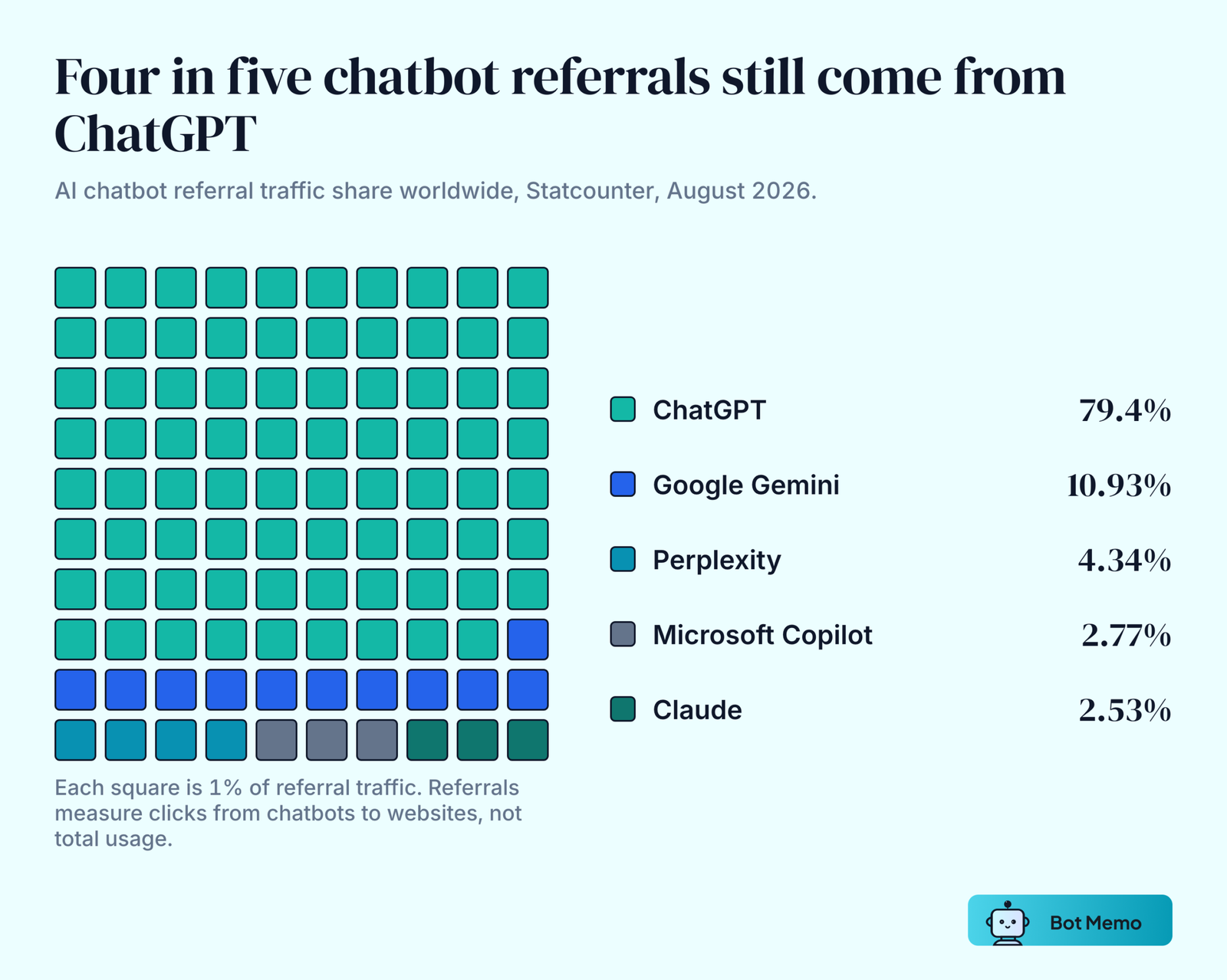
50. ChatGPT held 79.4% of AI chatbot referral traffic worldwide in August 2026, per Statcounter, which measures referrals from chatbots to its network of tracked websites rather than total usage. (Statcounter)
51. Behind it in August 2026: Google Gemini at 10.93%, Perplexity at 4.34%, Microsoft Copilot at 2.77%, and Claude at 2.53%. (Statcounter)
52. A year earlier, in August 2025, ChatGPT held 80.92% and Gemini 2.19%. Gemini’s share has roughly quintupled since, while ChatGPT’s has barely moved. (Statcounter)
53. On visits to the chatbots’ own websites, the picture is tighter. Similarweb’s Global AI Tracker put ChatGPT at 76.4% of generative AI web traffic in May 2025, 64.5% in January 2026, and 52.7% in May 2026, with Gemini near 27% and Claude near 9%. Its August 2026 update showed ChatGPT back up to 55.5% after two straight monthly gains, with Gemini down to 25.6% and Claude at 9.3%. (Similarweb)
2023 Traffic Benchmarks
54. In mid-2023, Similarweb’s dashboard showed ChatGPT at over 1.7 billion visits a month, with a 32.14% bounce rate, an average visit of 7 minutes 46 seconds, and 5.65 pages per visit. Monthly visits now run above 5 billion (5.72 billion in January 2026). (Similarweb)
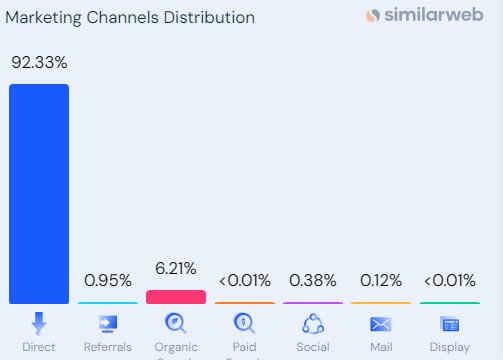
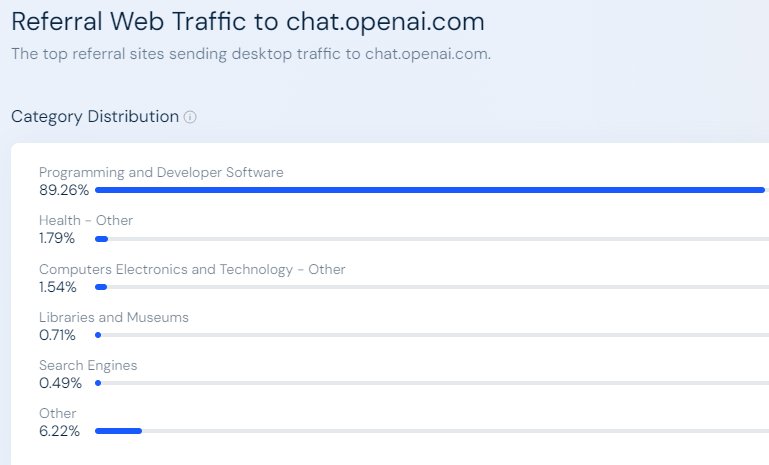
55. In the same 2023 snapshot, direct traffic was 92.33% of visits, organic search 6.21%, and referrals 0.95%. YouTube drove 48.86% of social traffic, followed by X at 21.16%, LinkedIn at 8.4%, Facebook at 7.55%, WhatsApp at 4.55%, and all other networks at 9.48%. Programming and software sites drove 89.26% of referrals, with health at 1.79% and computer tech at 1.54%. (Similarweb)
56. The 2023 country split: the United States at 12.12% of traffic, India 7.6%, Japan 4.17%, Brazil 3.32%, and Colombia 3.16%, with all other countries making up 69.62%. (Similarweb)
57. Even before ChatGPT, OpenAI’s models were generating about 4.5 billion words per day across the GPT-3 API as of 2021. (OpenAI)
How the Generative AI Market Looked Before the Boom
58. North America held 42.10% of global generative AI revenue in 2022, per The Brainy Insights. (The Brainy Insights)
59. In 2022, the software industry accounted for over 65% of the generative AI market, and media and entertainment held over 31% of usage share. (The Brainy Insights)
60. A 2023 forecast from The Brainy Insights projected the generative AI market to reach $188.62 billion by 2032 at a 36.10% compound annual growth rate. For current market sizing, see our generative AI market stats. (The Brainy Insights)
ChatGPT Revenue and Subscriber Statistics
OpenAI Revenue Growth
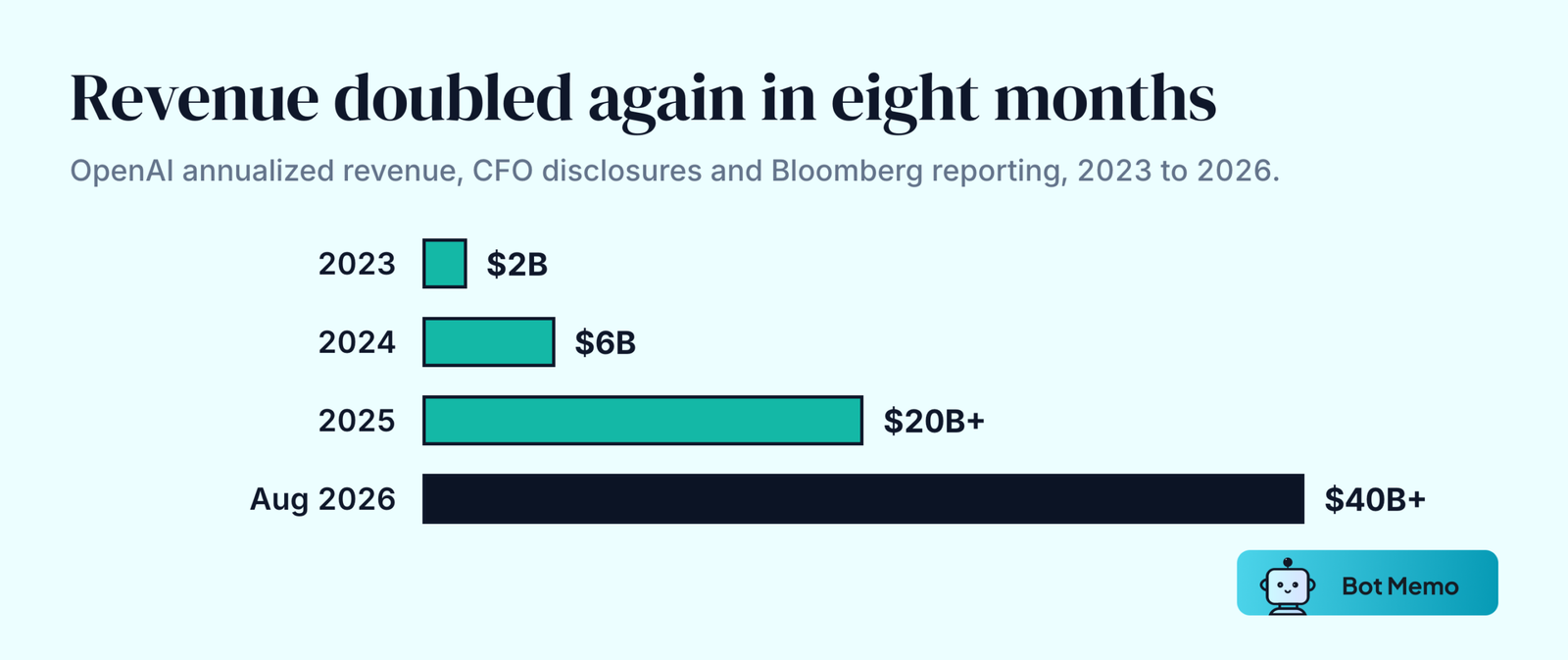
61. OpenAI’s annual recurring revenue grew from $2 billion in 2023 to $6 billion in 2024 to more than $20 billion in 2025, per CFO Sarah Friar in an official January 2026 OpenAI post. (OpenAI)
62. OpenAI confirmed $10 billion in annualized revenue in June 2025, counting consumer, business, and API revenue and excluding Microsoft licensing, via a spokesperson. (OpenAI)
63. When its funding round closed on March 31, 2026, OpenAI said revenue had crossed $2 billion a month, with enterprise revenue accounting for more than 40%. (OpenAI)
64. OpenAI’s annualized revenue run rate passed $40 billion by August 2026, roughly double where it ended 2025. (Press reports)
65. Recognized revenue, a different measure from the run rate, was $13.07 billion for full-year 2025, up from about $3.7 billion in 2024, per OpenAI financial documents cited in press reports. (OpenAI financial documents, as reported)
66. OpenAI generated $4.3 billion in revenue in the first half of 2025, with $2.5 billion in cash burn, per its disclosures to investors. (Investor disclosures, as reported)
67. ChatGPT’s advertising pilot passed $100 million in annualized revenue within six weeks of launching in the US, with more than 600 advertisers. (Press reports)
ChatGPT Plus and Paid Subscribers
68. ChatGPT Plus has cost $20 per month since its February 2023 launch. The lineup now runs from free to Go, Plus, a $100 Pro tier added in April 2026, and the $200 Pro tier, where OpenAI paused new sign-ups in September 2026. (OpenAI)
69. OpenAI had roughly 10 million paying ChatGPT subscribers in September 2024, per OpenAI financial documents cited in press reports. (OpenAI financial documents, as reported)
70. OpenAI had roughly 35 million paying subscribers across the Plus and Pro tiers as of July 2025. (Press reports)
71. OpenAI said on February 27, 2026 that it had more than 50 million consumer subscribers and more than 9 million paying business users. (OpenAI)
What Running ChatGPT Costs
72. Running ChatGPT cost an estimated $700,000 per day in 2023, on roughly 3,617 HGX A100 servers carrying 28,936 GPUs, per SemiAnalysis. (SemiAnalysis)
73. Microsoft’s first investment in OpenAI was $1 billion in 2019; its January 2023 extension was reported around $10 billion, taking total commitments to $13 billion. By June 30, 2026, $11.9 billion of that had been funded. (Microsoft filings)
74. Microsoft’s 10-Q for the September 2025 quarter recorded $4.1 billion in quarterly equity losses from its OpenAI stake. The next quarter swung to a $7.6 billion net gain, driven by OpenAI’s recapitalization. (Microsoft SEC filings)
OpenAI Valuation and Funding Statistics
OpenAI Valuation Timeline
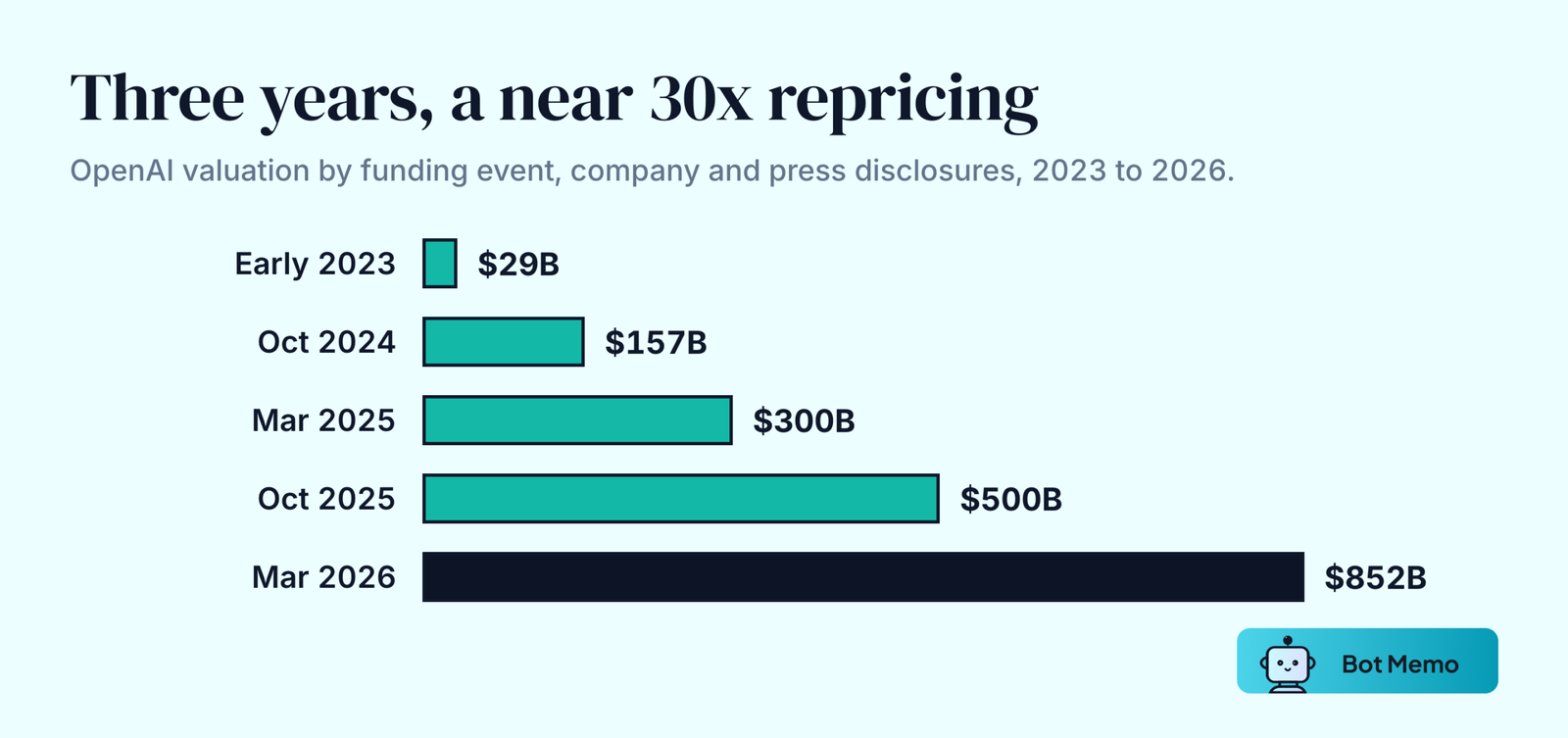
75. OpenAI was valued around $29 billion in early 2023, at the time of Microsoft’s reported $10 billion investment. (Press reports)
76. OpenAI raised $6.6 billion at a $157 billion valuation in October 2024. (OpenAI)
77. In March 2025, OpenAI raised $40 billion at a $300 billion valuation, the largest private funding round in history at the time. (OpenAI)
78. An October 2025 secondary share sale valued OpenAI at $500 billion. (Press reports)
79. OpenAI announced $110 billion of new investment at a $730 billion pre-money valuation on February 27, 2026. The round closed on March 31, 2026 at $122 billion and an $852 billion post-money valuation, with Amazon committing $50 billion and Nvidia and SoftBank $30 billion each. (OpenAI)
80. OpenAI completed a $7 billion employee share sale at the same $852 billion valuation in August 2026. (Press reports)
81. OpenAI said on June 8, 2026 that it had confidentially submitted a draft S-1 registration statement to the SEC, without setting a timeline for a listing. (OpenAI)
82. OpenAI completed its for-profit restructuring on October 28, 2025, becoming a Delaware public benefit corporation. Microsoft holds about 27% and the OpenAI Foundation about 26%. (OpenAI)
The Microsoft Partnership in Numbers
83. OpenAI contracted an incremental $250 billion of Azure services, disclosed on Microsoft’s Q1 FY2026 earnings call in October 2025, the same quarter Microsoft’s commercial bookings rose 112% on Azure commitments from OpenAI. (Microsoft)
84. About 45% of Microsoft’s $625 billion commercial remaining performance obligation came from OpenAI as of December 31, 2025, per the January 2026 earnings call. (Microsoft)
85. Microsoft recorded $24.1 billion of revenue from its commercial arrangements with OpenAI in fiscal 2026, per its annual report for the year to June 30, 2026. (Microsoft SEC filings)
How Businesses Use ChatGPT
Enterprise Adoption in 2025 and 2026
86. More than 1 million business customers used OpenAI directly as of November 2025, which OpenAI called the fastest-growing business platform in history. By July 2026 the company put the number of businesses using its models above 2 million. (OpenAI)
87. ChatGPT for Work passed 7 million seats in November 2025, with Enterprise seats up about 9x year over year. (OpenAI)
88. In August 2023, OpenAI reported that 80% of Fortune 500 companies had registered ChatGPT accounts, measured by corporate email signups. By August 2024, the figure was 92% of the Fortune 500 using OpenAI products. The 93% sometimes quoted appears in no OpenAI source. (OpenAI)
Named Company Deployments
89. 98% of Morgan Stanley financial advisor teams adopted the firm’s OpenAI-powered assistant. (Morgan Stanley)
90. PwC became OpenAI’s first reseller and largest ChatGPT Enterprise customer, rolling it out to more than 100,000 employees. (PwC)
91. Klarna’s OpenAI-powered assistant handled 2.3 million conversations in its first month in early 2024, work the company equated to 700 full-time agents, cutting resolution times from 11 minutes to under 2. Klarna re-hired human agents in 2025 after acknowledging quality had slipped. (Klarna)
Workplace Survey Benchmarks From 2023
92. In a 2023 ResumeBuilder survey, 49% of US companies said they used ChatGPT, and another 30% planned to start by the end of that year. (ResumeBuilder)
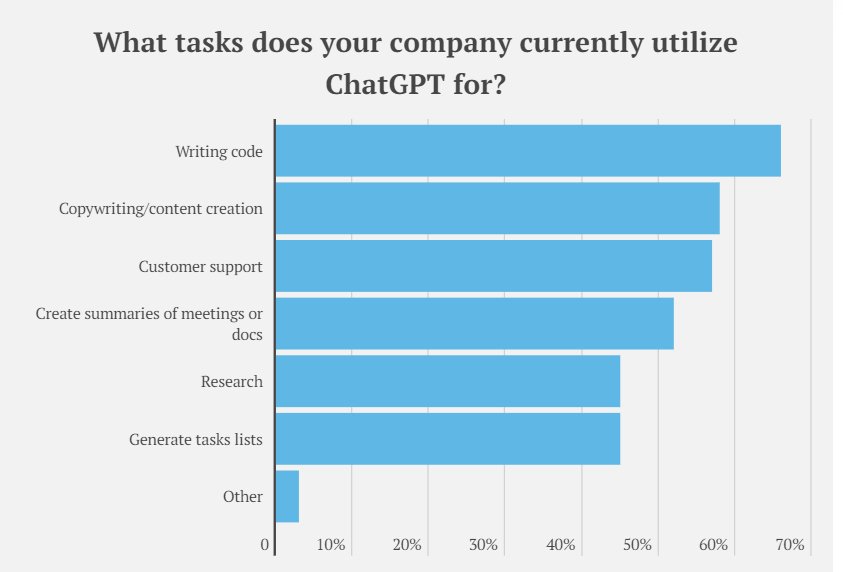
93. Of those companies, 66% used ChatGPT to write code, 58% for content, 57% for customer support, and 52% for meeting and document summaries. (ResumeBuilder)
94. For hiring, 77% of those companies used ChatGPT to write job descriptions, 66% to draft interview requisitions, and 65% to respond to applicants. (ResumeBuilder)
95. 48% of those companies reported saving over $50,000, and 11% over $100,000. (ResumeBuilder)
96. 33% of US companies in the same survey planned definite layoffs tied to ChatGPT adoption, and 31% called layoffs probable within five years. (ResumeBuilder)
97. 92% of business leaders called AI or chatbot experience a plus when hiring, and 90% valued ChatGPT-specific experience. (ResumeBuilder)
98. In a May 2023 Gartner poll, 45% of executives said ChatGPT had prompted them to increase AI investment, and 70% said their organization was exploring generative AI. (Gartner)
99. 68% of those executives said the benefits of generative AI outweigh its risks, against 5% who said the opposite. 38% named customer experience as the primary focus of generative AI investment, followed by revenue growth at 26%, cost optimization at 17%, and business continuity at 7%. (Gartner)
100. In Sortlist’s 2023 survey, employers predicted a 74% average productivity increase from generative AI (employees said 66%), while 23% of software and tech employees worried about their jobs. (Sortlist)
101. In the same Sortlist survey, 82% of employers said an AI watermark would not change how they use ChatGPT, and product management and customer service employees were twice as likely as marketers to worry about their jobs. (Sortlist)
102. 43% of employers in the Sortlist survey wanted to use ChatGPT as a marketing copywriter. Millennials were 43% more worried than other generations about job cuts in their industry, and 2.4 times more worried in finance, where only 14% of employees feared ChatGPT would be used to cut headcount. (Sortlist)
ChatGPT in Education
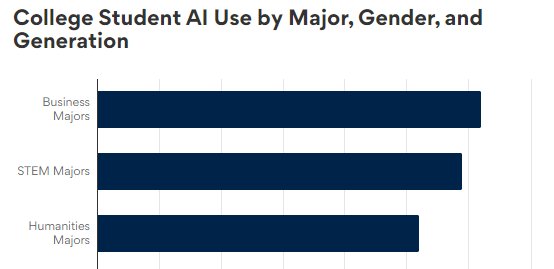
103. 56% of college students said they had used AI tools like ChatGPT on assignments or exams in 2023, per BestColleges, with business majors the heaviest users at 62% (STEM 59%, humanities 52%). 53% said they had coursework that required them to use AI. (BestColleges)
104. 56% of students called AI-written college applications an unfair advantage, and 50% said colleges should screen applications for AI use. 39% said AI tools on applications would improve access for underserved students. (BestColleges)
105. Google Scholar indexed more than 2,000 articles, reports, and papers about ChatGPT in 2023 alone. (ScienceDirect)
ChatGPT Product and Model Statistics
Model Milestones
106. GPT-3 was trained with about 175 billion parameters in 2020, and human evaluators still preferred outputs from the 1.3 billion parameter InstructGPT over the far larger model. (arXiv)
107. GPT-4, launched March 2023, could handle over 25,000 words of input with context lengths of 8,192 to 32,768 tokens (the word fragments a model reads), against 4,096 for GPT-3.5. OpenAI measured it as 82% less likely to respond to disallowed content and 40% more likely to produce factual responses than GPT-3.5, and in 24 of the 26 languages tested it outperformed GPT-3.5’s English-language score on MMLU, a multiple-choice test spanning 57 academic subjects. (OpenAI)
108. GPT-4’s training data ran through September 2021, so at launch it had no knowledge of later events. Releases have come every few months since: GPT-4o in May 2024, o1 in September 2024, o3 in April 2025, GPT-5 on August 7, 2025, GPT-5.5 Instant as the ChatGPT default in May 2026, and GPT-6 Astra in September 2026. (OpenAI)
Platform Capabilities
109. ChatGPT’s text-to-speech supported around 57 languages as of 2023. (OpenAI)
110. ChatGPT was available in 161 countries in 2023. OpenAI’s supported-countries list now names 208 countries and territories, with Russia, China, and Iran still excluded. (OpenAI)
111. Audio uploads for transcription are capped at 25MB across seven supported formats. (OpenAI)
Trust and Privacy Concerns
112. 76% of Singapore respondents worried that ChatGPT may collect and use personal data without their knowledge or consent, against 36% in Indonesia, in a Statista survey spanning four Southeast Asian countries. (Statista)
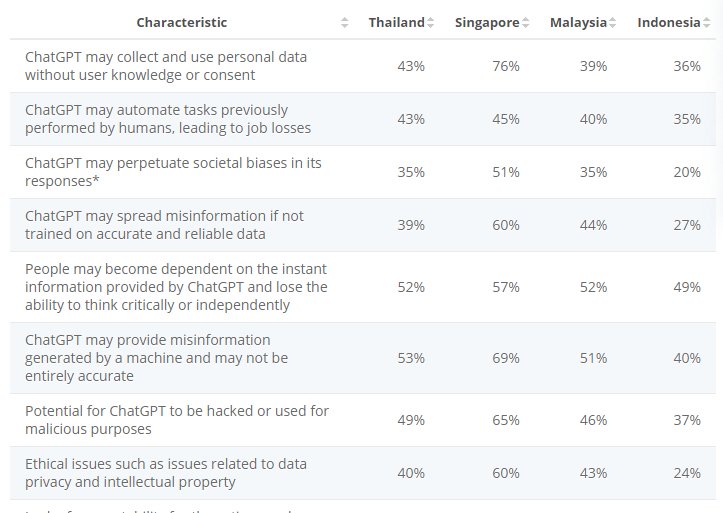
113. Almost 39% of employees and employers in Sortlist’s 2023 survey worried that ChatGPT would cost their work its human touch. OpenAI’s privacy policy lists IP address, browser type and settings, and how people interact with the service among the data it collects. (Sortlist, OpenAI)
Key Takeaways
ChatGPT’s weekly user base grew ninefold in 27 months, from 100 million in November 2023 to more than 900 million in February 2026, and its app passed 1 billion monthly users in May 2026. In the US, use climbed from 18% of adults in 2023 to 44% in 2026, and 61% of adults under 30.
Revenue moved faster than users. OpenAI’s run rate went from $2 billion in 2023 to more than $40 billion by August 2026, and the valuation followed, from $29 billion to $852 billion in three years.
The lead is intact but narrowing. ChatGPT still takes 79.4% of chatbot referral traffic, yet Gemini’s share of that traffic has roughly quintupled in a year, and on visits to the chatbots’ own websites Similarweb had ChatGPT at 55.5% in its August 2026 update, down from 76.4% in May 2025. For the full rival picture, see our Google Gemini statistics and chatbot statistics.
Frequently Asked Questions
How Many Users Does ChatGPT Have in 2026?
OpenAI’s latest weekly figure is more than 900 million weekly active users, given on February 27, 2026. The ChatGPT app passed 1 billion monthly active users in May 2026 on Sensor Tower estimates, and in July 2026 OpenAI said its models reach more than 1 billion active users across its products. Our number of ChatGPT users page tracks the count over time.
How Many People Use ChatGPT Daily?
OpenAI does not publish a daily active users count. Its users sent about 2.6 billion messages a day in June 2025, and Pew Research Center found 24% of US adults use an AI chatbot every day in February 2026.
What Percentage of Americans Use ChatGPT?
44% of US adults use ChatGPT, per Pew Research Center’s 2026 survey, up from 18% in 2023. Among adults 18 to 29, the share is 61%.
How Much Revenue Does OpenAI Make?
OpenAI’s annualized revenue run rate passed $40 billion by August 2026. CFO Sarah Friar disclosed more than $20 billion in annual recurring revenue for 2025, and recognized revenue for 2025 was $13.07 billion.
What Share of the Chatbot Market Does ChatGPT Hold?
ChatGPT held 79.4% of AI chatbot referral traffic in August 2026, per Statcounter. On visits to the chatbots’ own websites, Similarweb put it at 55.5% of generative AI traffic in its August 2026 update, with Gemini second at 25.6%.
What Is OpenAI Worth?
OpenAI was valued at $852 billion post-money when its $122 billion round closed on March 31, 2026, and an August 2026 employee share sale held that price. More detail is on our OpenAI statistics page.
Sources and Methodology
Every statistic on this page traces to a named source.
OpenAI user, revenue, and enterprise milestones come from official OpenAI posts, executive statements at public events, or spokesperson confirmations to the press.
Financial figures between official disclosures come from reporting that cites company documents or investor disclosures, and their source labels say so. Microsoft partnership numbers come from Microsoft’s SEC filings and earnings calls, filed or given under securities rules.
Population-level adoption data comes from probability-sampled surveys by Pew Research Center and large online panel surveys by the Reuters Institute, with sample sizes and field dates given inline.
Traffic, download, and consumer spending figures are estimates from Statcounter, Similarweb, Sensor Tower, Appfigures, and OneLittleWeb. Statcounter counts referrals from chatbots to websites, while Similarweb counts visits to the chatbots’ own sites, which is why the two market share readings differ.
Usage-pattern figures come from OpenAI’s Economic Research study of 1.5 million consumer conversations, published September 2025, which excludes business and API traffic.
Statistics from 2023 surveys (ResumeBuilder, Savanta, Sortlist, Gartner, BestColleges, Statista) and 2023 analytics snapshots are kept as dated benchmarks and marked with their year.
Sortlist’s survey covered 500 employees and employers in six European countries, fielded December 2022 to January 2023. Statista’s 2023 gender split and parts of Similarweb’s 2023 dashboard come from pages their publishers have since replaced, so they appear with their original source and year.
OpenAI remains a private company with no public reporting obligations, so subscriber counts and interim revenue figures carry more uncertainty than the rest. For the wider AI adoption picture, see our AI statistics.

About the author
Editorial Staff
The Editorial Staff at Bot Memo is a team of writers, analysts, and AI agents dedicated to mapping the global AI startup ecosystem. Led by Chintan Zalani, the team tracks thousands of funding rounds, classifies companies across verticals, and distills it all into actionable intelligence for investors and founders.