


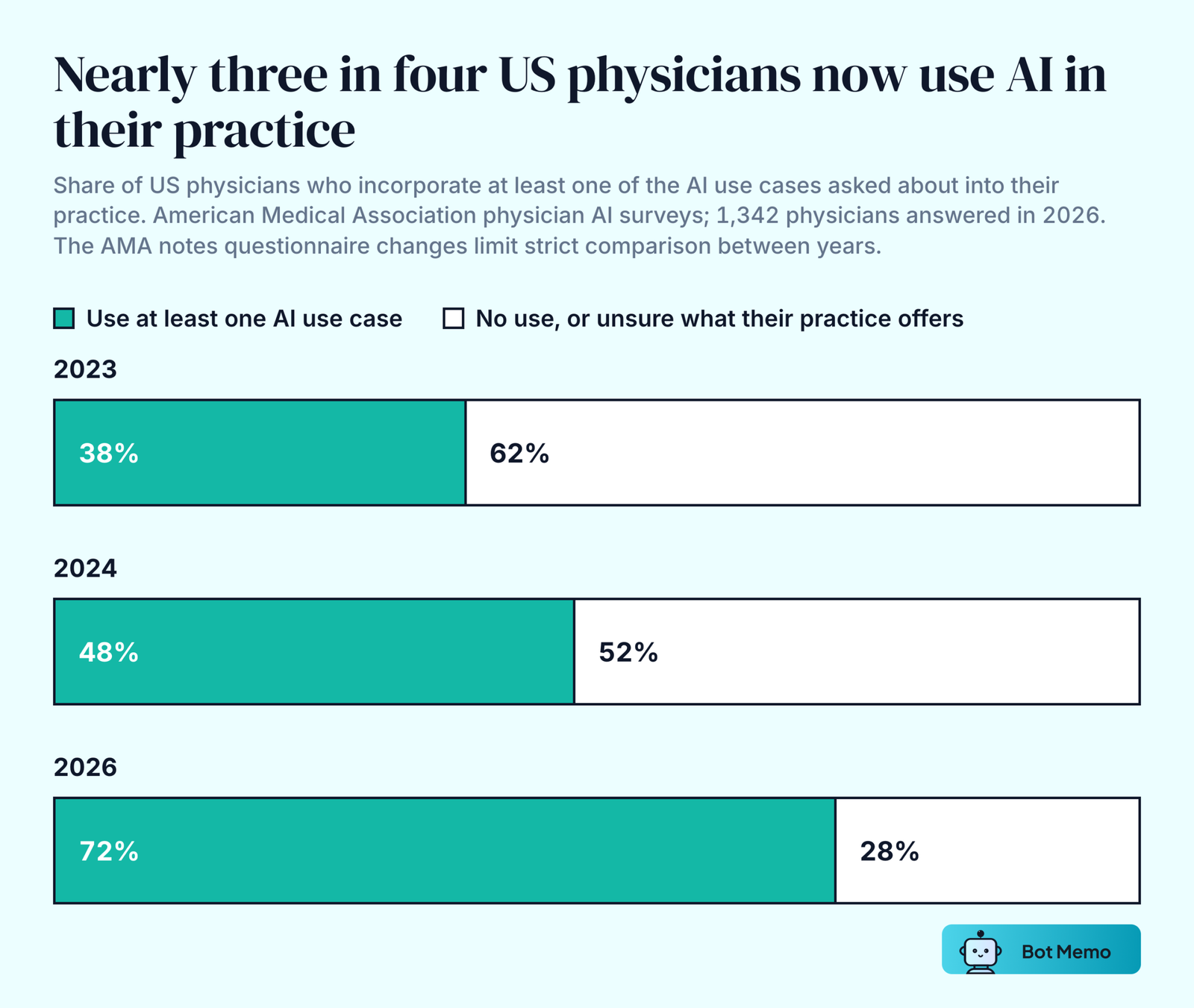
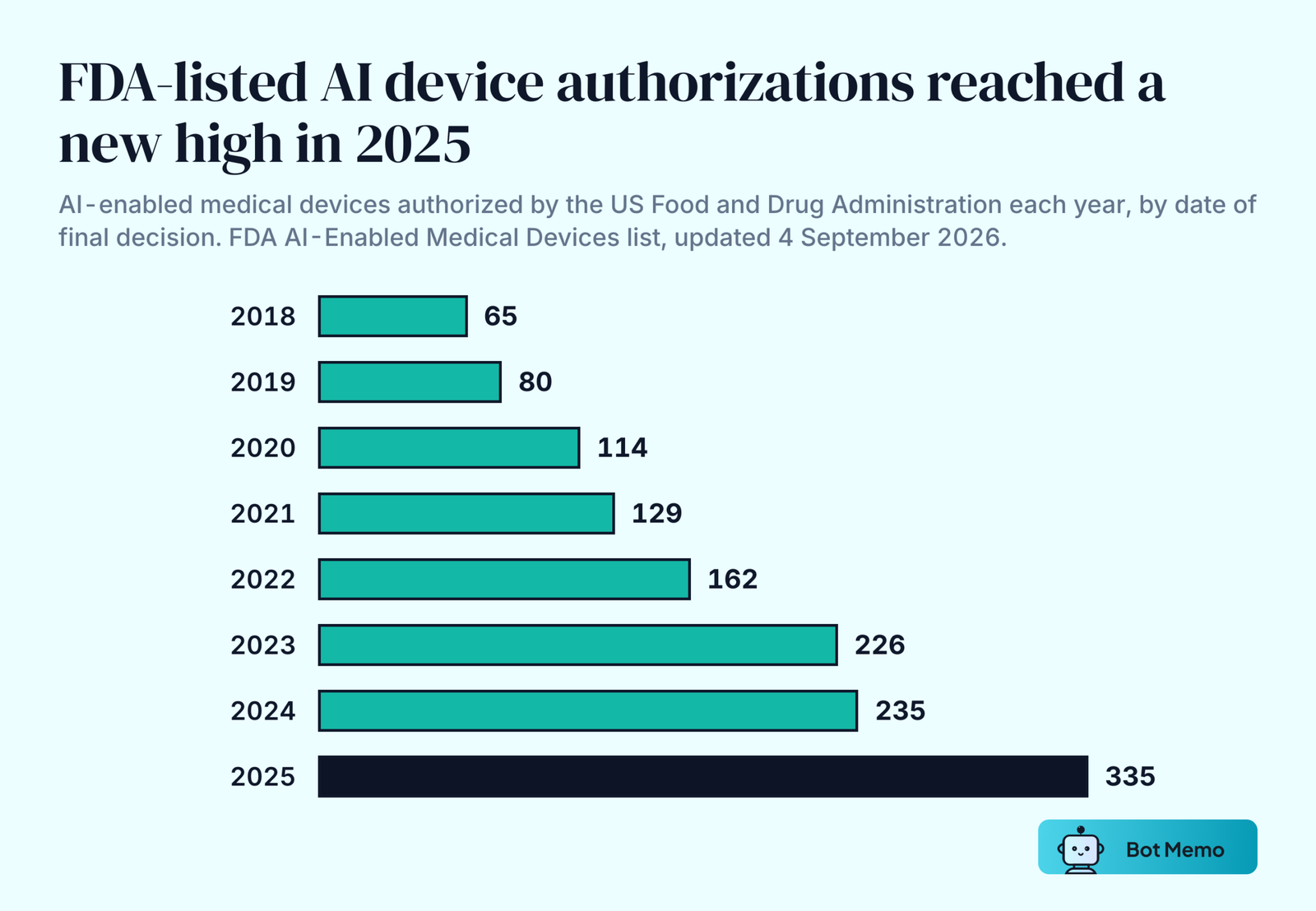
AI in healthcare has moved from pilot projects into daily use. The US Food and Drug Administration now lists 1,614 AI-enabled medical devices, and 335 of them were authorized in 2025, the most for any year. In the American Medical Association’s 2026 survey, 72% of US physicians said they use at least one AI tool in their practice, up from 38% in 2023. Patients are using it too: 34% of US adults now turn to AI chatbots for health reasons, according to Pew Research Center.
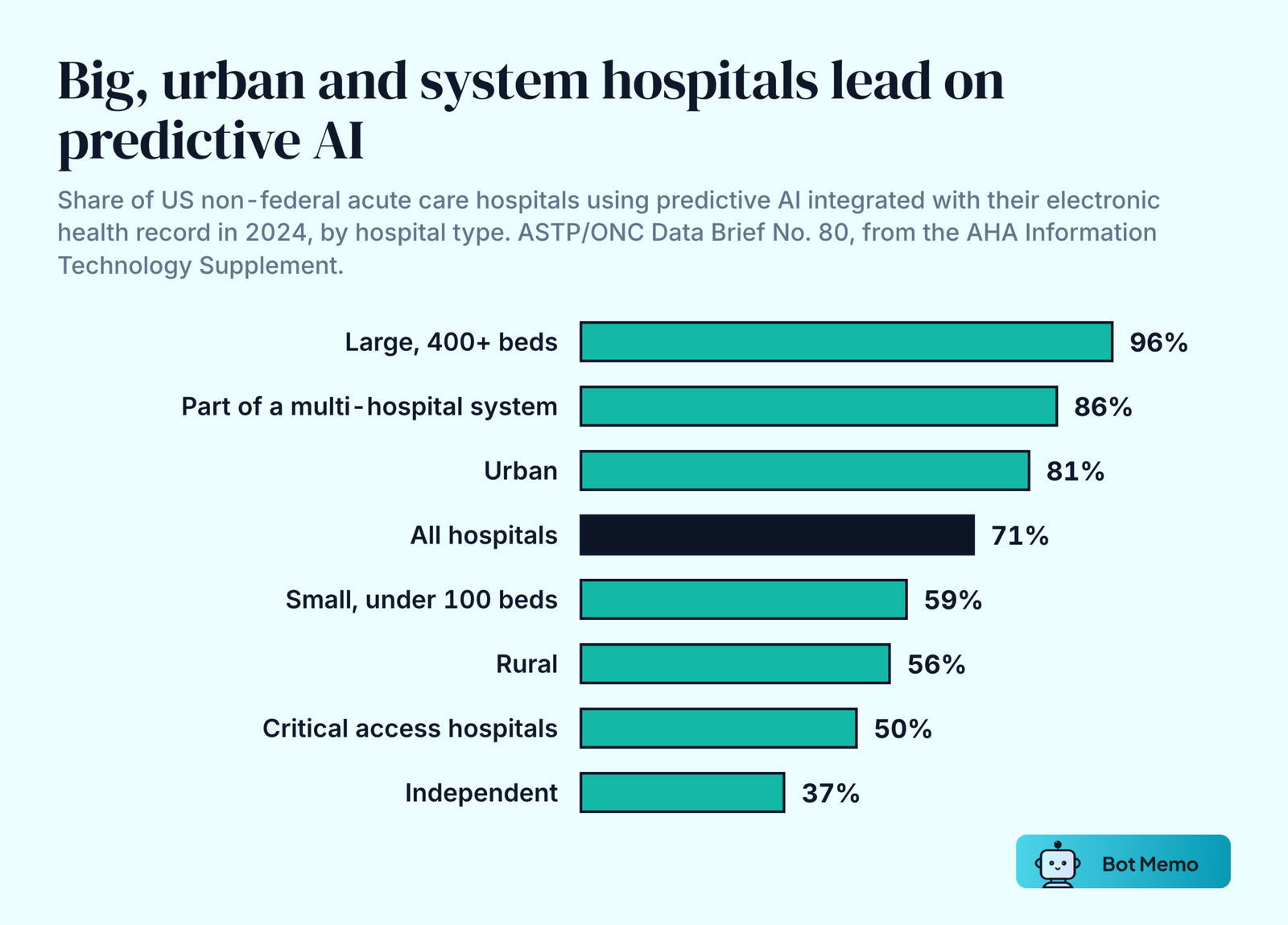
The evidence on results is growing but uneven. A study of 463,094 women in Germany found AI-supported breast cancer screening caught 17.6% more cancers, and clinicians using ambient AI scribes reported less burnout after 30 days, 38.8% against 51.9% before. Adoption also depends on the buyer. In 2024, 86% of US hospitals in multi-hospital systems used predictive AI, compared with 37% of independent hospitals.
Below are the latest AI in healthcare statistics for 2026, grouped by market size, adoption, FDA devices, diagnostic accuracy, documentation and administration, patients, drug discovery, funding and the workforce. Where a newer study has replaced an older figure, both numbers are shown.
On this page
- Key AI in Healthcare Statistics for 2026
- AI in Healthcare Market Size
- AI Adoption in Healthcare
- FDA AI-Enabled Medical Devices
- AI Diagnostic Accuracy and Clinical Outcomes
- AI for Clinical Documentation and Administration
- Patients and AI in Healthcare
- AI in Drug Discovery and Clinical Trials
- AI Healthcare Funding and Investment
- AI and the Healthcare Workforce
- Challenges and Limitations of AI in Healthcare
- Key Takeaways
- Frequently Asked Questions
- Sources and Methodology
Key AI in Healthcare Statistics for 2026
- The FDA’s list of AI-enabled medical devices reached 1,614 entries, including 335 authorized in 2025, the most for any year (FDA).
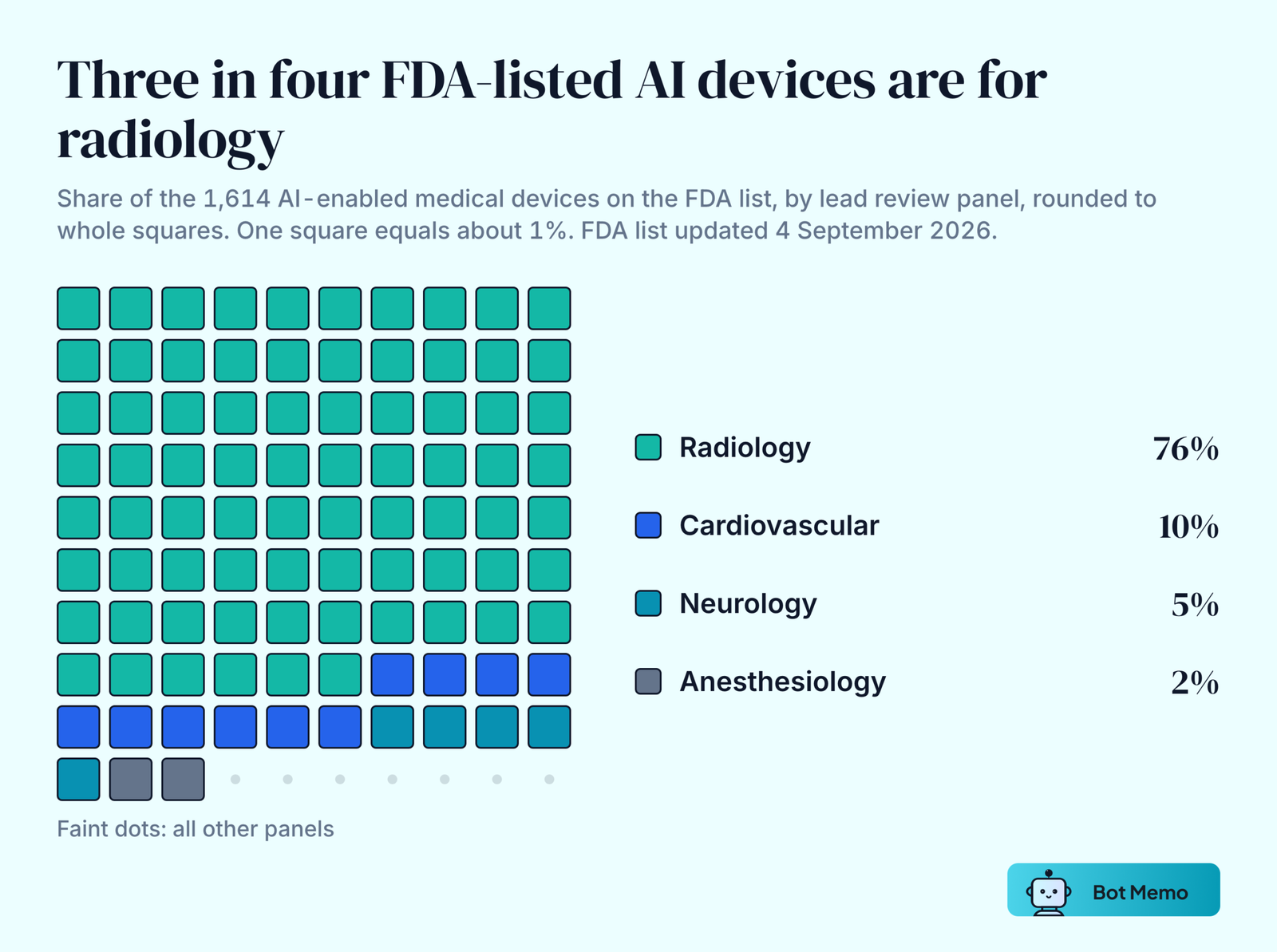
- 76% of the AI-enabled devices on the FDA list are reviewed by its radiology panel (FDA device list, September 2026).
- 72% of US physicians use at least one AI use case in their practice, and 81% report some awareness or use of AI in their practice (American Medical Association, 2026).
- 71% of US hospitals used predictive AI integrated with their electronic health record in 2024, up from 66% in 2023 (ASTP/ONC).
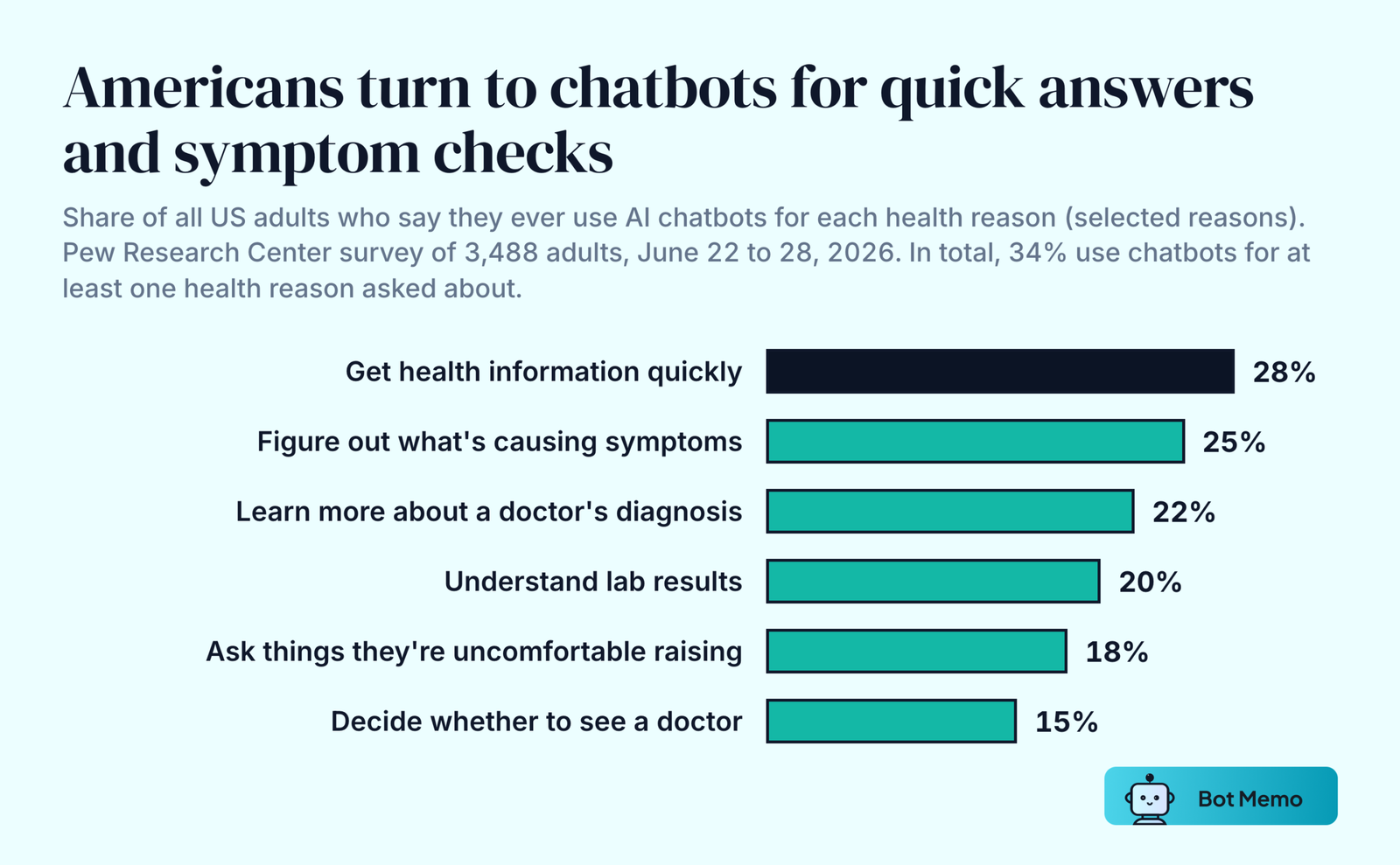
- 34% of US adults say they ever use AI chatbots for at least one of eight health reasons Pew asked about (Pew Research Center, 2026).
- Spending on healthcare-specific generative AI tools reached $1.4 billion in 2025, nearly triple 2024, and 22% of healthcare organizations have implemented domain-specific AI tools (Menlo Ventures).
- AI-enabled startups took 54% of the $14.2 billion invested in US digital health in 2025 (Rock Health).
- Ambient AI scribe use was associated with a drop in clinicians reporting burnout from 51.9% to 38.8% after 30 days (JAMA Network Open, 2025).
- 21 of 24 AI-discovered drug candidates that completed Phase I trials succeeded, an 80% to 90% success rate (Drug Discovery Today, 2024).
AI in Healthcare Market Size
Market research firms agree the AI in healthcare market is growing fast, but they size it very differently because each defines the market in its own way. The estimates below are shown side by side rather than averaged.
Global AI in Healthcare Market Estimates
- MarketsandMarkets projects the global AI in healthcare market will grow from $36.67 billion in 2026 to $194.79 billion by 2031, a 39.7% compound annual growth rate (MarketsandMarkets, June 2026). Its previous edition valued the market at $14.92 billion in 2024 and $21.66 billion in 2025, with $110.61 billion forecast for 2030 (May 2025).
- Grand View Research estimates $36.7 billion in 2025 and $50.7 billion in 2026, rising to $505.6 billion by 2033 at a 38.9% growth rate (Grand View Research, June 2026).
- Fortune Business Insights puts the market at $39.34 billion in 2025 and $56.01 billion in 2026, and forecasts $1.03 trillion by 2034, a 43.96% growth rate (Fortune Business Insights).
- Precedence Research previously projected $613.81 billion by 2034 at a 36.83% growth rate. Its current edition values the market at $36.96 billion in 2025 and projects $744.34 billion by 2035, at 35.02% a year (Precedence Research).
- North America held more than 45% of the market in 2025, and software solutions were the largest segment at 44.6% (Precedence Research).
- The AI remote patient monitoring market is projected to grow from $1.99 billion in 2024 to $8.51 billion by 2030 (Grand View Research).
Spending and Economic Value
- Menlo Ventures estimates that spending on healthcare-specific generative AI tools reached $1.4 billion in 2025, nearly triple 2024. The estimate excludes general-purpose AI tools. Ambient clinical documentation accounted for $600 million and coding and billing automation for $450 million (Menlo Ventures, October 2025).
- AI tools for prior authorization are already a market worth more than $100 million, growing about 10 times year over year (Menlo Ventures).
- The McKinsey Global Institute estimates generative AI could create $60 billion to $110 billion a year in economic value for the pharmaceutical and medical-product industries (McKinsey, 2024).
- In 2017, Accenture projected that 10 clinical AI applications could save the US healthcare economy $150 billion a year by 2026. The largest were robot-assisted surgery ($40 billion), virtual nursing assistants ($20 billion), administrative workflow assistance ($18 billion), fraud detection ($17 billion) and dosage error reduction ($16 billion) (Accenture).
- About 40% of healthcare working hours go to language-based tasks that generative AI could change: 17% could be automated and 23% augmented (Accenture).
AI Adoption in Healthcare
Adoption has grown quickly across doctors, hospitals and health systems, but surveys measure different things. Some count any use of an AI tool; others count organization-wide deployment, which is still rare.
AI Adoption Among Physicians
- 72% of US physicians incorporate at least one AI use case into their practice in 2026, up from 48% in 2024 and 38% in 2023. Another 9% are unsure which AI tools their practice offers (AMA 2026 Physician AI Survey, 1,692 physicians surveyed in January and February 2026, 1,342 of whom answered this question). The AMA notes that changes to the questionnaire limit strict comparison between survey years.
- Counting those unsure physicians, 81% report some awareness or use of AI in their practice, up from 66% in 2024. The AMA described the 2024 figure as a 78% jump from 38% in 2023 (AMA, February 2025).
- The most common use is summarizing medical research and standards of care, at 39% of physicians, up from 13% in 2024 (AMA, 2026).
- Documentation tools come next: 30% use AI to create discharge instructions, care plans or progress notes, and 28% for billing codes, charts or visit notes (AMA, 2026).
- The average physician now uses 2.3 AI use cases, up from 1.1 in 2023 (AMA, 2026).
- 76% of physicians see AI as an advantage in caring for patients, up from 65% in 2023. 92% want more education and training on AI (AMA, 2026).
AI Adoption in Hospitals
- 71% of US non-federal acute care hospitals used predictive AI integrated with their electronic health record in 2024, up from 66% in 2023 (ASTP/ONC Data Brief No. 80, based on the AHA IT Supplement; 2,080 hospitals answered the question in 2024).
- Large hospitals with more than 400 beds reached 96%, while small hospitals with fewer than 100 beds were at 59%. In 2023 the figures were 90% and 53%.
- 86% of hospitals in multi-hospital systems used predictive AI, compared with 37% of independent hospitals. Rural hospitals were at 56% and critical access hospitals at 50%.
- Among hospitals already using predictive AI, the fastest-growing uses were billing automation, which rose from 36% to 61%, and scheduling, from 51% to 67% (ASTP/ONC).
Generative AI in Healthcare Organizations
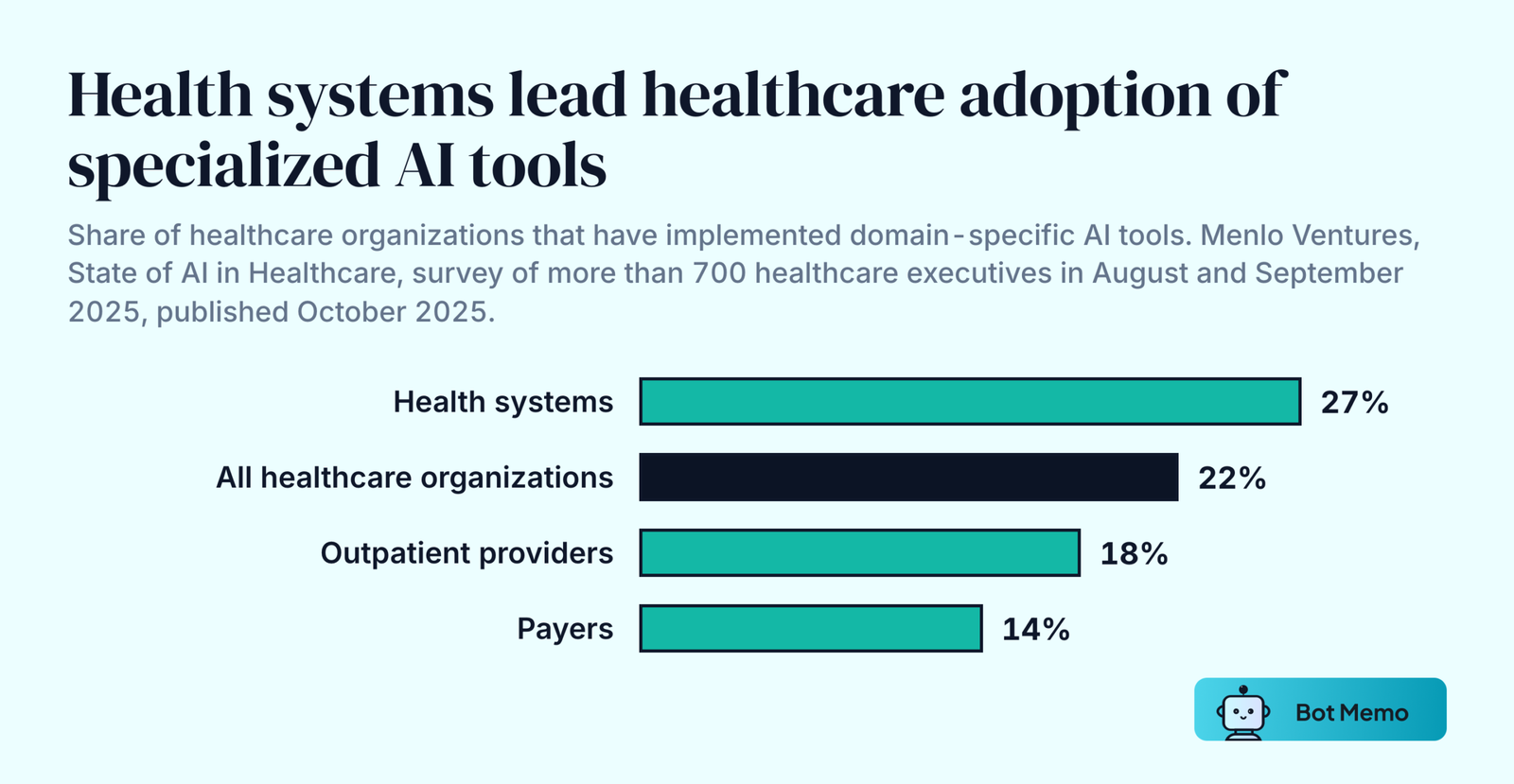
- 22% of healthcare organizations have implemented domain-specific AI tools, 7 times the 2024 level and 10 times the 2023 level. Health systems lead at 27%, followed by outpatient providers at 18% and payers at 14%. Across the wider US economy, fewer than 1 in 10 companies (9%) have implemented any kind of AI, according to US Census Bureau data cited in the same report (Menlo Ventures, 700+ healthcare executives surveyed in August and September 2025, published October 2025).
- 50% of US healthcare leaders at payers, clinical care organizations and healthcare services and technology companies said their organization had implemented generative AI in McKinsey’s fourth-quarter 2025 survey, up from 47% a year earlier and 25% in 2023 (McKinsey, April 2026).
- In McKinsey’s late-2024 survey, 85% were exploring or had already adopted generative AI (McKinsey).
- About 30% of health systems surveyed by Deloitte run generative AI at scale in select areas, but only 2% have deployed AI across the whole enterprise. Most health system executives do not expect AI to have a major strategic impact in 2026 (Deloitte 2026 Global Health Care Outlook).
- A year earlier, about 90% of healthcare C-suite executives expected digital technology use to accelerate in 2025, and more than 80% of health system executives expected generative AI to have a significant (26%) or moderate (55%) impact (Deloitte 2025 outlook, 121 executives in six countries).
FDA AI-Enabled Medical Devices
The FDA keeps a public list of AI-enabled medical devices that have been cleared, granted or approved for marketing in the US. The agency updates it periodically and notes that it is not a complete record of every device that uses AI. The counts below come from the version updated on 4 September 2026, which covers decisions through 29 June 2026.
Total FDA AI Device Authorizations
- The FDA list includes 1,614 AI-enabled medical devices, the earliest authorized in 1995 (FDA).
- 335 devices on the list were authorized in 2025, the most for any year, up from 235 in 2024 and 226 in 2023.
- Annual authorizations have grown more than fivefold since 2018, when the FDA authorized 65.
- 181 devices were authorized in the first half of 2026, slightly ahead of the 176 in the first half of 2025.
AI Devices by Medical Specialty
- Radiology is the lead review panel for 1,230 of the devices, or 76% of the list.
- Cardiovascular devices are second with 154 (9.5%), followed by neurology with 73 (4.5%). All panels outside the top four account for 127 devices, or 7.9%.
- Anesthesiology (30), gastroenterology and urology (27) and hematology (22) are the only other panels with more than 20 devices each.
AI Diagnostic Accuracy and Clinical Outcomes
The strongest evidence comes from imaging, where large screening programs and a randomized trial have tested AI alongside radiologists. Much of the older evidence comes from smaller retrospective studies, and their accuracy figures come from test datasets rather than routine care.
AI in Medical Imaging
- In Germany’s PRAIM study of 463,094 women screened by 119 radiologists, AI-supported reading detected 6.7 breast cancers per 1,000 women, compared with 5.7 without AI, a 17.6% higher detection rate. The recall rate was not higher: 37.4 per 1,000 with AI and 38.3 without (Nature Medicine, 2025).
- In the interim analysis of Sweden’s randomized MASAI trial, covering 80,033 women, AI-supported screening detected 6.1 cancers per 1,000 compared with 5.1 for standard double reading, and cut radiologists’ screen-reading workload by 44.3% (Lancet Oncology, 2023).
- The completed MASAI trial of 105,934 women found interval cancer rates of 1.55 per 1,000 with AI and 1.76 without, meeting its safety goal. Sensitivity was 80.5% with AI against 73.8% without, and specificity was 98.5% in both groups (The Lancet, January 2026).
- In a test of three commercial AI tools for brain bleeds on 3,409 CT scans from 67 medical organizations in Moscow, the AI tools reached 93.2% to 97.4% sensitivity and 75.4% to 92.3% specificity. Radiologists using AI as an assistant did better on both, at 98.91% sensitivity and 99.83% specificity (Journal of Clinical Medicine, 2025).
- One machine learning model for breast cancer imaging reached an area under the curve (AUC) of 0.91, with 77.3% specificity at 87% sensitivity for predicting malignancy (Cureus review, 2023).
- A neural network for kidney tissue detected 92.7% of 1,819 annotated glomeruli in 15 nephrectomy samples (Hermsen et al., Journal of the American Society of Nephrology, 2019). A 2023 review rounded this to 92% of glomeruli, with 10.4% false positives.
AI Diagnosis Beyond Imaging
- Microsoft’s AI Diagnostic Orchestrator correctly solved 85.5% of 304 complex New England Journal of Medicine case records. 21 practicing physicians averaged 20% on the same cases, working without colleagues, textbooks or AI (Microsoft AI, June 2025).
- A natural language model that read initial oncology consultation notes for 47,625 patients predicted 6-month, 36-month and 60-month survival with more than 80% accuracy (JAMA Network Open, 2023; UBC).
- Clare Medical reported that its AI diagnostic tool reduced ER visits and hospitalizations by 79.2% in what it called a large-scale trial (Clare Medical, March 2023). The figure is the company’s own.
AI During the COVID-19 Pandemic
A 2021 review of AI for COVID-19 diagnosis collected these results from individual studies (International Journal of Biological Sciences):
- A classification model told COVID-19 patients apart from influenza patients with 92.5% sensitivity and 97.9% specificity.
- A random forest model classified COVID-19 clinical types with more than 90% accuracy.
- Mortality prediction models exceeded 90% sensitivity and specificity, with an AUC above 96%.
- On chest CT scans, a ResNet-101 model reached 99.51% accuracy, 100% sensitivity, 99.02% specificity and an AUC of 99.4%.
- The review’s authors concluded that AI may be as accurate as experienced physicians at diagnosing COVID-19.
AI for Clinical Documentation and Administration
Documentation is the largest category in Menlo Ventures’ estimate of healthcare-specific generative AI spending, led by ambient scribes that listen to a patient visit and draft the clinical note.
Ambient AI Scribes
- In a study of 263 ambulatory clinicians at six US health systems, 30 days of ambient AI scribe use was associated with a drop in the share reporting burnout from 51.9% to 38.8%, an adjusted estimate based on the 184 clinicians with complete data. Clinicians also reported less after-hours documentation time and more undivided attention for patients (JAMA Network Open, October 2025). It was a quality improvement study without a control group, and two of its authors worked for Abridge, the scribe vendor.
- Ambient clinical documentation was the largest category of healthcare-specific generative AI spending in 2025, at $600 million (Menlo Ventures).
- Epic, the largest US electronic health record vendor, announced its own AI Charting tool in August 2025 and began rolling it out in February 2026 (MedTech Dive).
- 85% of healthcare professionals said AI can reduce their administrative burden (Philips Future Health Index 2025).
- A year later, 46% of clinicians reported that AI saves them at least 132 hours a year, and 50% said they have more capacity to see patients, eight more a week on average (Philips Future Health Index 2026, 2,000+ professionals and 20,000+ patients in 10 countries).
Prior Authorization and Claims
- 61% of US physicians are concerned that health plans’ use of AI is increasing prior authorization denials (AMA, February 2025).
- 41% of healthcare providers say more than 10% of their claims are denied, up from 38% in 2024 and 30% in 2022 (Experian Health, State of Claims 2025).
Patients and AI in Healthcare
Patient surveys measure two different things: how people use AI tools for health information, and how comfortable they are with providers using AI in their care. Several of the attitude surveys below predate the wide use of chatbots, so their dates matter.
How Patients Use AI Chatbots for Health
- 34% of US adults say they ever use AI chatbots for at least one of eight health reasons Pew asked about. The most common reasons are getting health information quickly (28%) and figuring out what is causing symptoms (25%) (Pew Research Center, 3,488 adults, June 2026).
- 22% use chatbots for health information at little or no cost, 22% to learn about treatments and 22% to understand a doctor’s diagnosis (Pew, 2026).
- Use is highest among adults aged 18 to 29, at 44%, and lowest among those 65 and older, at 17% (Pew, 2026).
- 47% of chatbot health users find the information extremely or very helpful, and 48% somewhat helpful (Pew, 2026).
- 32% of US adults turned to AI tools for physical or mental health information in the past year: 29% for physical health and 16% for mental health (KFF, March 2026).
- In 2024, 17% of adults used AI chatbots at least once a month for health information, and 56% of AI users were not confident the information was accurate (KFF, August 2024).
- More than 5% of all ChatGPT messages worldwide are about healthcare, and more than 40 million people ask it about healthcare every day (OpenAI, January 2026).
Patient Trust in AI
- 60% of US adults would be uncomfortable if their own healthcare provider relied on AI to diagnose disease and recommend treatments; 39% would be comfortable (Pew Research Center, February 2023, 11,004 adults).
- 40% think AI in health and medicine would reduce the number of mistakes providers make, compared with 27% who think it would increase them (Pew, 2023).
- 38% think AI would lead to better health outcomes, 33% worse and 27% that it would not make much difference (Pew, 2023).
- 64% of Black adults say bias based on a patient’s race or ethnicity is a major problem in health and medicine. Among Americans who see racial bias as a problem, 51% think more use of AI would make it better and 15% worse (Pew, 2023).
- 72% of US adults say it is extremely or very important for a provider to tell them when AI is used in their care (Pew Research Center, August 2026).
- 63% of healthcare professionals are optimistic that AI could improve patient outcomes, but less than half of patients share that view (Philips Future Health Index 2025, 1,900+ professionals and 16,000+ patients in 16 countries).
- 32% of US adults would be comfortable with AI leading a primary care appointment, and 25% with AI-led therapy (SurveyMonkey and Outbreaks Near Me, June 2023, 3,317 adults).
- Parents of children with respiratory illnesses were comfortable with AI deciding whether antibiotics are needed (77.6%), interpreting X-rays (77.5%) and reading bloodwork (76.5%) (Academic Pediatrics, 2022, 1,620 parents at Lurie Children’s Hospital of Chicago).
AI and Mental Health Support
- 34% of US adults would be comfortable sharing mental health concerns with an AI chatbot instead of a human therapist, rising to 55% among 18 to 29-year-olds (YouGov, May 2024, 1,500 adults).
- 46% of Americans familiar with AI mental health chatbots worry about data privacy. 50% find ease of access the most appealing feature of these chatbots, followed by privacy and anonymity at 41% (YouGov, 2024).
- 46% of US psychologists had no openings for new patients in 2025, down from 60% in 2022 (American Psychological Association, 2025 Practitioner Pulse Survey, 1,742 psychologists; 2022 survey).
- About 157 million Americans live in federally designated mental health professional shortage areas, up from about 122 million in 2024. Removing those designations would take 7,825 more practitioners (HRSA, June 2026).
AI in Drug Discovery and Clinical Trials
Success Rates for AI-Discovered Drugs
- 21 of 24 AI-discovered molecules that completed Phase I trials succeeded, an 80% to 90% success rate, well above historical industry averages. In Phase II, 4 of 10 succeeded, about 40%, in line with the industry (Jayatunga et al., Drug Discovery Today, 2024).
- AI could cut the time from drug discovery to proof of concept by 35% to 50% and costs by 25% to 50% (BCG for Wellcome, 2023).
AI Drug Programs in the Clinic
- Insilico Medicine dosed the first patient in a Phase III trial of rentosertib, its generative AI-designed drug for idiopathic pulmonary fibrosis, on 10 September 2026. The trial plans to enroll 320 patients at 47 centers in China (Insilico Medicine).
- Insilico had 10 programs in clinical development as of 30 June 2026 (Insilico Medicine).
- Isomorphic Labs, spun out of Google DeepMind, raised $2.1 billion in Series B funding in May 2026, led by Thrive Capital (Isomorphic Labs). Its first external round, in March 2025, raised $600 million (Isomorphic Labs). Company-level funding is tracked in AI drug discovery startups.
AI in Clinical Trial Recruitment
- At Cleveland Clinic, Dyania Health’s AI identified an eligible melanoma trial patient in 2.5 minutes with 96% accuracy, compared with 95% accuracy in 427 minutes for a melanoma-specialized nurse. In a heart disease trial, it found 30 eligible patients in one week, against 14 found over 90 days by routine recruitment (Cleveland Clinic, August 2025).
AI Healthcare Funding and Investment
Digital Health Venture Funding
- US digital health startups raised $14.2 billion across 482 deals in 2025, up 35% from $10.5 billion in 2024. AI-enabled companies closed 50% of the deals and took 54% of the money, up from 37% in 2024 (Rock Health).
- In the first half of 2025, AI-enabled startups took 62% of digital health funding, and their average round of $34.4 million was 83% larger than the $18.8 million average for other startups (Rock Health).
- US digital health startups raised $7.4 billion across 244 deals in the first half of 2026, up from $6.4 billion a year earlier. Rock Health stopped labeling startups as AI-enabled that year because, in its words, AI had become ubiquitous (Rock Health).
- Mega deals of $100 million or more took 45% of first-half 2026 digital health funding, up from 22% in 2024 (Rock Health).
Major AI Healthcare Funding Rounds
- OpenEvidence, a medical search tool for clinicians, raised $250 million at a $12 billion valuation in January 2026, led by Thrive Capital and DST Global (CNBC).
- Abridge raised a $300 million Series E at a $5.3 billion valuation in June 2025, led by Andreessen Horowitz (Abridge).
- Ambience Healthcare raised a $243 million Series C in July 2025, co-led by Oak HC/FT and Andreessen Horowitz (Ambience Healthcare).
Company-level detail is in top AI healthcare startups, the healthcare AI market map and AI startup funding statistics.
AI and the Healthcare Workforce
Staffing Shortages
- The World Health Organization projects a shortfall of 11 million health workers by 2030, mostly in low and lower-middle income countries (WHO).
- The US faces a shortage of up to 86,000 physicians by 2036 (AAMC, March 2024).
- In 2021, Mercer projected a shortage of 3.2 million lower-wage US healthcare workers, such as medical assistants and nursing assistants, within five years (Mercer).
- The US hospital registered nurse vacancy rate is 8.6% (NSI 2026 National Health Care Retention and RN Staffing Report).
Jobs and Attitudes
- Private healthcare and social assistance is the second-fastest-growing US industry sector, with employment projected to grow 9.5% from 2025 to 2035, against 3.5% for all jobs. Data scientist jobs are projected to grow 34.6%, among the 10 fastest-growing occupations (US Bureau of Labor Statistics, August 2026). In the previous projections, for 2024 to 2034, the figures were 8.4% and 33.5%.
- 94% of health and life sciences executives believe AI will improve productivity and efficiency, 91% say AI needs human supervision, 85% think adoption at work is too slow and 83% are concerned about AI helping personalize medical plans or diagnoses (EY, June 2024, 66 executives).
- In 2022, 71% of healthcare leaders trusted predictive analytics in clinical settings and 72% in operational settings, and 56% had adopted or were adopting predictive analytics (Philips Future Health Index 2022).
- 48% of working Americans believe AI will reduce the number of jobs in their industry (YouGov, August 2024).
Challenges and Limitations of AI in Healthcare
- A systematic review of 33 studies published from 2015 to 2022 found the main challenges were ethics and data privacy, lack of awareness, unreliable technology and professional liability. The main opportunities were diagnosis and patient monitoring, drug development and virtual health assistants (Urologic Oncology, 2024).
- Only 2% of health systems in Deloitte’s 2026 survey have deployed AI across the whole enterprise.
- Most FDA-listed AI devices are for imaging, and most outcome evidence is too. The PRAIM study let radiologists choose whether to use AI rather than randomizing them, so MASAI remains the main randomized evidence for AI in screening.
- 72% of US adults say it is extremely or very important to be told when AI is used in their care (Pew, 2026).
Key Takeaways
- AI is now routine for most US physicians. 72% use at least one AI tool in practice, nearly double the 2023 share.
- 335 AI-enabled devices on the FDA list were authorized in 2025, the most of any year, and three in four listed devices are for radiology.
- Large and system-owned hospitals are far ahead on predictive AI: 96% of large hospitals against 59% of small ones, and 86% of system hospitals against 37% of independent ones.
- Ambient scribes took $600 million of healthcare-specific generative AI spending in 2025, and early studies link their use to lower self-reported burnout.
- A third of US adults use chatbots for health reasons, and 72% want to be told when AI is used in their care.
Frequently Asked Questions
How Many FDA-Authorized AI Medical Devices Are There?
The FDA’s AI-enabled medical devices list had 1,614 devices as of its 4 September 2026 update, covering decisions through June 2026. 335 of them were authorized in 2025, the most for any year on the list. Radiology accounts for 76%. The FDA notes the list is not a complete record of every AI-enabled device.
What Percentage of Doctors Use AI?
72% of US physicians use at least one AI use case in their practice, according to the American Medical Association’s 2026 survey. Counting physicians who are unsure which AI tools their practice offers, 81% report some awareness or use of AI.
What Percentage of Hospitals Use AI?
71% of US non-federal acute care hospitals used predictive AI integrated with their electronic health record in 2024, up from 66% in 2023. Large hospitals were at 96% and small ones at 59%; hospitals in multi-hospital systems were at 86% and independent hospitals at 37%.
How Big Is the AI in Healthcare Market?
Estimates for 2026 range from $36.67 billion (MarketsandMarkets) to $56.01 billion (Fortune Business Insights), because research firms define the market differently. Forecasts include $194.79 billion by 2031 and $505.6 billion by 2033.
How Many People Use AI Chatbots for Health Information?
34% of US adults say they ever use AI chatbots for at least one of eight health reasons, according to Pew Research Center’s June 2026 survey. The most common reason is getting health information quickly.
How Accurate Is AI in Diagnosing Breast Cancer?
In the PRAIM study of 463,094 women in Germany, AI-supported screening detected 6.7 cancers per 1,000 women, 17.6% more than screening without AI, with no rise in recalls. In Sweden’s randomized MASAI trial, AI support raised sensitivity to 80.5% from 73.8% with the same specificity, and cut radiologists’ reading workload by 44.3% in the interim analysis.
Do AI Scribes Reduce Doctor Burnout?
Early evidence links them to less burnout. In a 2025 JAMA Network Open study of clinicians at six US health systems, 30 days of ambient AI scribe use was associated with a drop in reported burnout from 51.9% to 38.8%. The study had no control group.
Sources and Methodology
This page collects published figures from regulators, medical associations, peer-reviewed journals, survey organizations, research firms and companies. Each statistic links to the report or page that published it, with the sample, geography and date where the publisher states them. Figures were checked against those publications on 16 September 2026.
FDA device counts are taken from the FDA’s downloadable AI-enabled medical devices list, updated 4 September 2026, counted by year of final decision and by lead review panel. Market-size estimates come from commercial research firms whose definitions differ, so they are shown side by side. Company-reported results, such as trial outcomes and funding rounds, are labeled as such.
Main sources:
- US Food and Drug Administration, AI-Enabled Medical Devices list (September 2026)
- American Medical Association, 2026 Physician AI Survey (1,692 physicians)
- ASTP/ONC Data Brief No. 80, hospital use of predictive AI, 2023 to 2024
- Pew Research Center surveys of US adults (2023 and 2026)
- KFF Tracking Polls on Health Information and Trust (2024 and 2026)
- Menlo Ventures, State of AI in Healthcare (2025); Rock Health funding reports (2025 and 2026)
- Nature Medicine, Lancet Oncology, JAMA Network Open and other peer-reviewed studies
- Deloitte, McKinsey, Accenture, Philips Future Health Index and EY
- MarketsandMarkets, Grand View Research, Fortune Business Insights and Precedence Research
- WHO, AAMC, HRSA, NSI Nursing Solutions and US Bureau of Labor Statistics

About the author
Editorial Staff
The Editorial Staff at Bot Memo is a team of writers, analysts, and AI agents dedicated to mapping the global AI startup ecosystem. Led by Chintan Zalani, the team tracks thousands of funding rounds, classifies companies across verticals, and distills it all into actionable intelligence for investors and founders.