
An idea based on digital permanence says what’s on the internet stays there forever.
This might not be true as a study by Pew Research says what’s posted online doesn’t usually last long.
Yet data privacy and protection are important, and no one wants to risk security breaches happening to them.
What are the issues concerning data privacy, and what’s being done to minimize the risks?
Let’s find out with some statistics below.
On this page
- Key Data Privacy Statistics: Editor’s Choice
- How is AI Impacting Data Privacy?
- Statistics Around Data Privacy Awareness
- Statistics Around Data Breaches
- Data Privacy in Daily Life
- Users Feeling Trapped by Inescapable Data Collection
- Insights on Data Legacy
- How Businesses Feel About Data Privacy
- Final Thoughts on Data Privacy
Key Data Privacy Statistics: Editor’s Choice
1. 82% of adults were worried about their online data security.
2. The average cost savings for organizations using security AI and automation is USD 2.22 million.
3. 32% have experienced catfishing on a dating site.
4. 78.1% of businesses reported no negative impact from implementing privacy requirements.
5. 81% of users believe that a company’s treatment of their data reflects how it values them.
How is AI Impacting Data Privacy?
Many internet users are still in the dark about their data, and they’re even inputting it into LLMs, where data isn’t private.
Let’s look at a report from Cisco, that goes into statistics on how AI is influencing data privacy:
79% Are Getting Very Significant or Significant Value From GenAI
A lot of respondents are already deploying it in their organizations.
69% Worry That GenAI May Harm Their Company’s Legal Rights and Intellectual Property
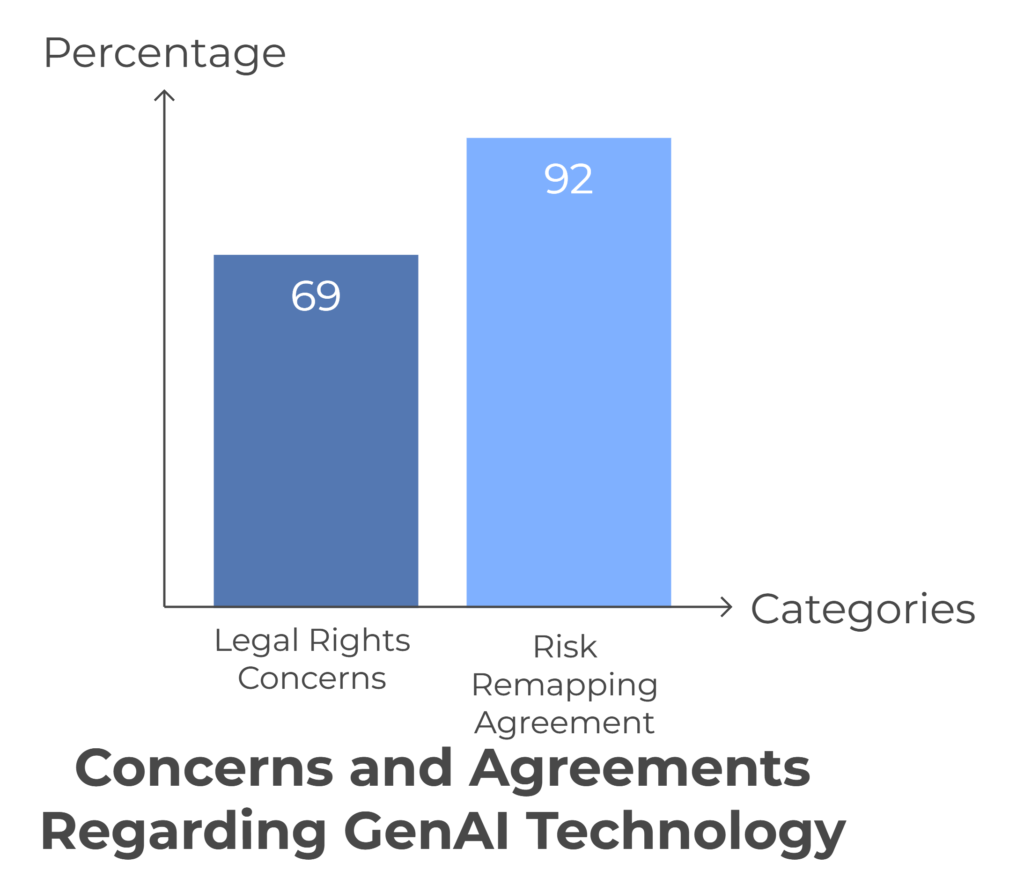
92% also agree that GenAI is a completely different technology, and the risks here have to be remapped.
48% Are Entering Non-Public Information About the Company Into GenAI Apps
Another 45% have entered employee names or information into them as well, and ChatGPT stores all data and uses it to improve its AI model.
44% of Security Leaders Rank Generative AI as a Top Initiative
AI is a double-edged sword in the sense that it can help reduce risks but also be used maliciously by threat actors.
45% predict these threat actors will benefit more from AI, while 43% say defenders will win out. (Splunk, 2024)
Statistics Around Data Privacy Awareness
Are adults aware of how private their data is?
It turns out most adults (82%) have concerns about the security of their data, and around half of them use some sort of security measure.
Let’s dig in some more into the security of consumer data.
82% of Adults Were Worried About the Security of Their Personal Data Online
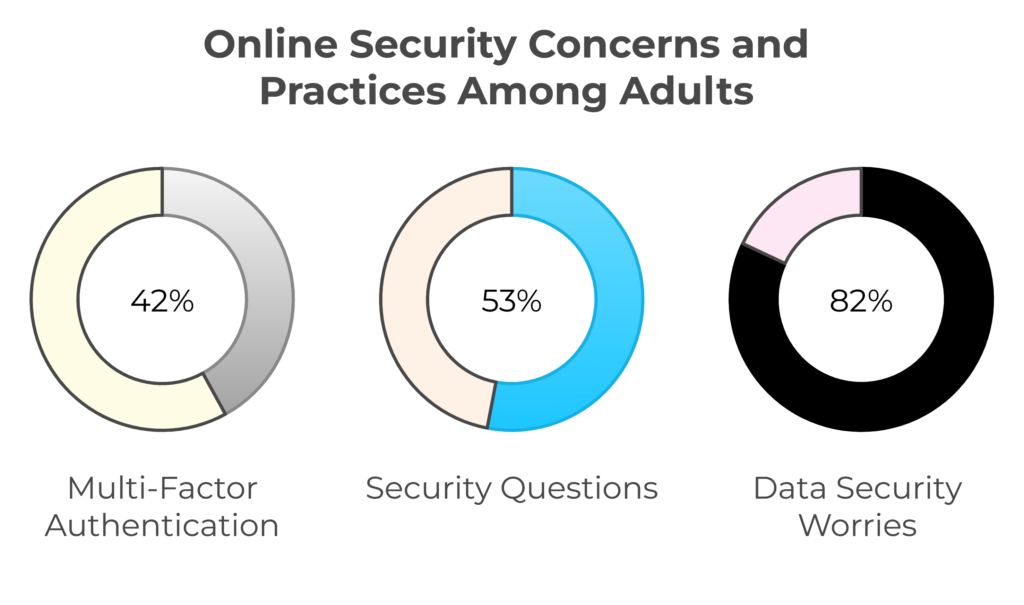
Despite this widespread concern, very few adults are taking steps to protect their information. (U.S. News, 2024)
42% of Adults Use Multi-Factor Authentication
Experts in data security say that multi-factor authentication is a good way to add protection to your online accounts. (U.S. News, 2024)
53% of Adults Use Security Questions to Verify Their Identity
Security questions are usually personal questions that the user chooses to verify their identity for tasks like accessing their account or changing their password. (U.S. News, 2024)
Only One in Four Adults Said They Accessed Their Accounts Only From Trusted Devices
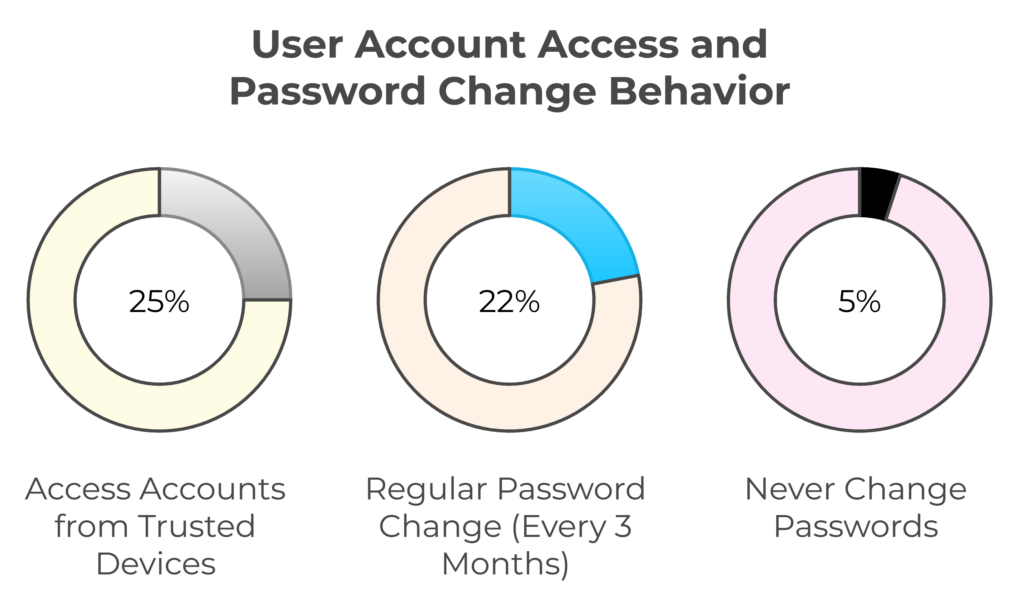
Only 22% of users change their password regularly- which is taken to be around 3 months.
5% also never change their passwords, which tends to put them more at risk for future security breaches. (U.S. News, 2024)
19% of Adults Requested Data Changes or Deletion in 2023
This is highly correlated with age, with 32% of consumers aged 18-24 making data change requests compared to only 4% of the 75+ consumers. (Cisco, 2023)
One reason for this could be the tech literacy gap between ages.

Statistics Around Data Breaches
Let’s look at some more technical statistics on data breaches and intrusions that are faced by business professionals.
The Mean Number of Days to Identify Data Breaches Was 194 Days in 2024
The mean time companies needed to contain the breaches was 64 days, in 2024. (Statista, 2024)
Here are some more stats on criminal intrusions, from a recent Crowdstrike report on Global Threat:
There Is a 60% Year-Over-Year Increase in the Number of Interactive Intrusion Campaigns
The tech industry had the most intrusions, followed by the telecommunications and finance industry.
The Average Breakout Time for Interactive eCrime Intrusion Activity Was 62 Minutes in 2023
The fastest-ever breakout time observed was only 2 minutes and 7 seconds.
Login Intrusion Begins 39 Minutes After Credential Compromise, According to CrowdStrike Report
Login intrusions are when cybercriminals try to gain access to a system by repeatedly inputting possible usernames and passwords until they guess correctly.
USD 2.22M Is The Average Cost Savings for Organizations Extensively Using Security AI and Automation
The average cost of a data breach in 2024 is $ 4.88 million. (IBM, 2024)
Data Privacy in Daily Life
Let’s look at some more personal instances of data privacy in normal life, by this report by Norton:
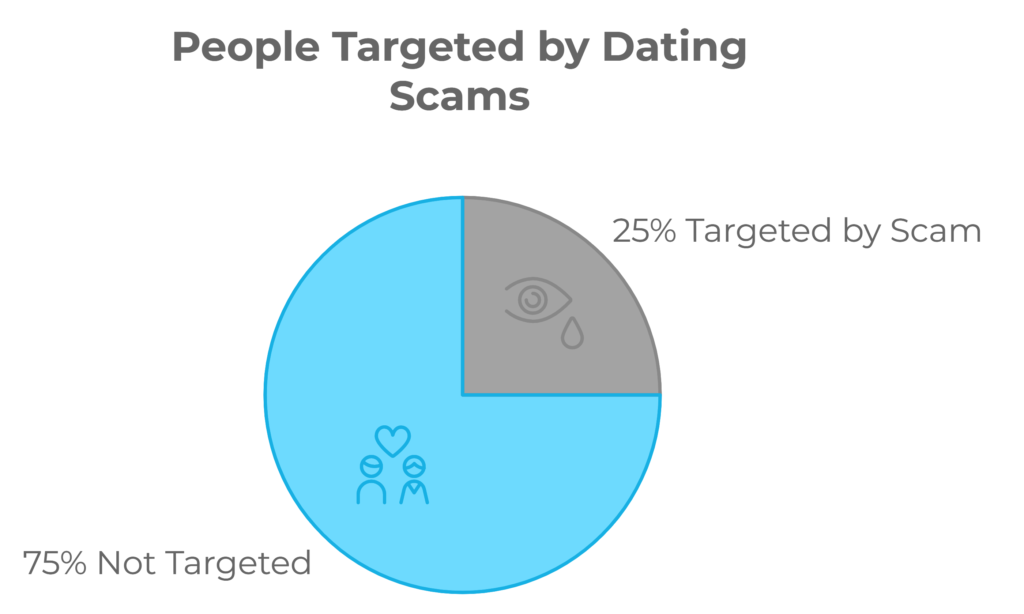
One in Four People Report That They Have Been Targeted by a Dating Scam
This is quite a high number considering the number of social media users in general.
32% Have Experienced Catfishing on a Dating Site
7% aren’t sure if they were catfished by someone on a dating app.
56% Have Used an AI Tool, Such as Photoshop or Canva, to Enhance Their Photos
59% have also used AI for coaching on how to be presentable.
About 17% of iOS Apps Declare They Track Users
It turns out iPhones come with privacy costs. Based on Apple’s App Privacy labels, a minority of apps declare that they use data to track users, though more collect data linked to user identities.
This is around 403,672 apps, or roughly 17% of the total, based on self-reported privacy labels. About 37% declare using data linked to users. (42matters, 2024)
Users Feeling Trapped by Inescapable Data Collection
Even concerning sensitive data, users feel like they don’t have much of a say in how companies use them.
Before we go into that, let’s look at data privacy legislation, and data privacy laws that are beneficial for you to know.
The Vast Majority of Americans Support the Contents of the American Data Privacy and Protection Act
82% of respondents also support allowing people who are victims of data breaches their right to sue for damages. (Morning Consult, 2022)
President Biden Issued an Executive Order in 2024 to Protect Americans’ Sensitive Personal Data From Exploitation
The threat of data exploitation came from other countries of concern. (White House, 2024)
In California, Citizens Have the Right to Limit the Use and Disclosure of Sensitive Personal Data by Businesses
This was in January 2023, citizens also have the right to correct any incorrect information stored by businesses about them. (Ca Gov., 2024)
81% of Users Believe a Company’s Treatment of Their Data Reflects How It Values Them
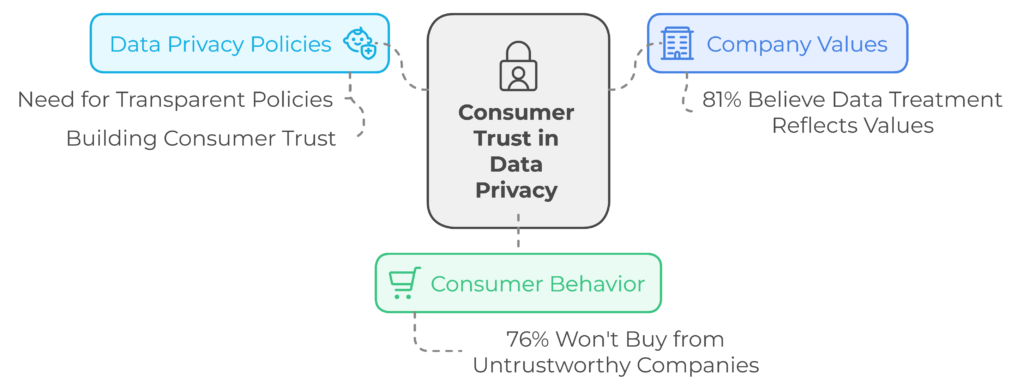
76% of respondents would not buy from a company that they can’t trust with their personal data. (Cisco, 2022)
According to Pew Research Center:
81% Are Concerned About How Companies Use the Data They Collect
70% of those who heard about AI also don’t trust companies to ethically use the technology.
71% Are Concerned About How the Government Uses the Data They Collect
This is an increase of 7%, from the previous 64% who thought so in 2019.
Concerningly, 67% Have Little to No Understanding About What Companies Do With the Data They Collect
This is also an increase of 8% from the previous value of 59%.
Insights on Data Legacy
From a YouGov survey on Britons, you can see how Britons want their data to be managed after their death.
Here are what the respondents said:
25% of Brits Want Their Information Completely Deleted
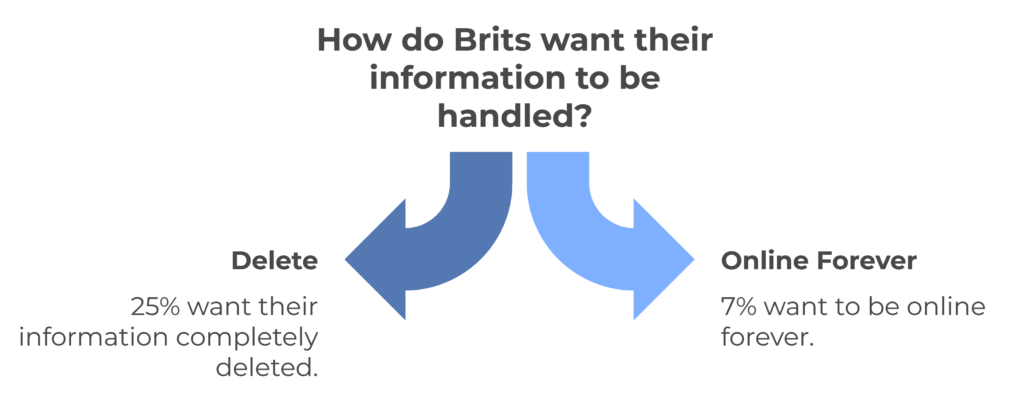
7% want to be online forever.
26% of Brits Want Their Information Downloaded, Taken Offline, and Given to Family and Friends
There is also an age divide when it comes to preserving data, with older people being less sentimental about preserving it.
34% of those aged 65+ wanted their data to be completely deleted, compared to 17% of those aged 18-25.
53% Said They Would Give Family Members the Passwords to Their Smartphones Before They Die
23% said that they would keep the password to themselves.
36% of Britons Aged 18 to 25 Would Take Their Smartphone Password Secret to the Grave
Only 40% of this age group said they would pass it on.
How Businesses Feel About Data Privacy
91% of Organizations Acknowledge the Need to Better Reassure Customers About AI Data Usage
A further 94% of organizations say that customers won’t make purchases from them if their data isn’t well protected. (Cisco, 2024)
98% of Organizations Report Privacy Metrics to Their Board of Directors
Privacy metrics are quantitative or qualitative metrics that are there to measure the amount of privacy users have in a system. (Cisco, 2024)
Majority of Businesses Described Data Privacy as ‘Necessary’
Other words used in this context were: confusing, complicated, complex, and important. (Termly, 2024)
78.1% of Businesses Had No Negative Impact from Implementing Privacy Requirements
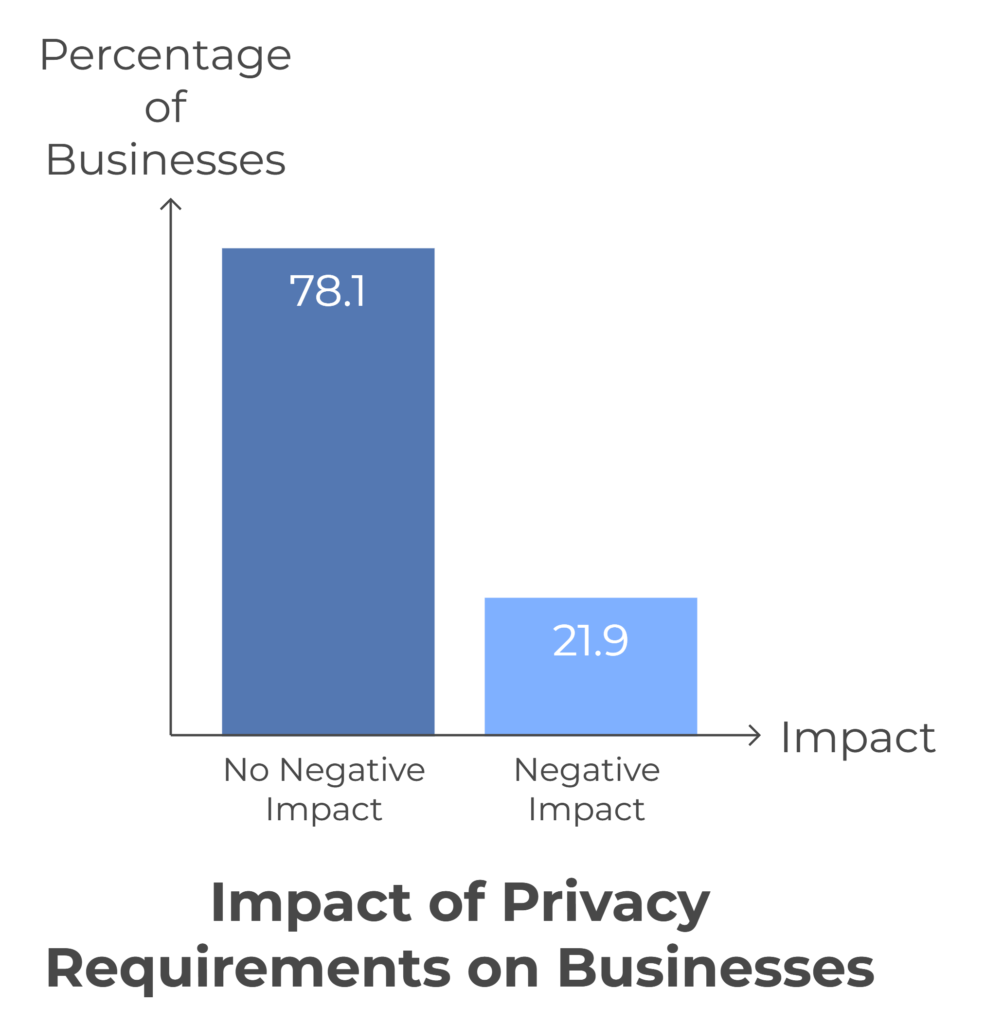
While 21.% said that there have been negative effects from implementing them.
91.1% of Businesses Will Prioritize Data Privacy to Increase Customer Trust
This is based on the claim that doing so would boost consumer trust and loyalty.
Top Privacy Metrics Tracked: Audit Results and Data Breaches Lead the Way
98% of respondents report one or more privacy metrics to the Board, and over half are reporting three or more. (Cisco, 2024)
44% of Organizations Track Audit Results as a Key Privacy Metric in 2024
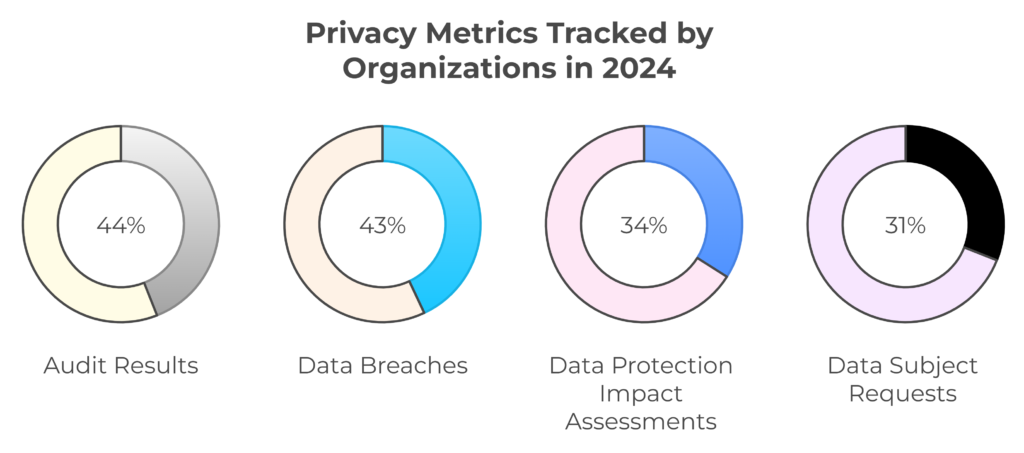
43% track data breaches, 34% data protection impact assessments, and 31% data subject requests. (Cisco, 2024)
Final Thoughts on Data Privacy
In the future, finding ways to protect data privacy will be paramount, especially those that are more efficient than existing data protection measures.
For more insights on privacy, and whether it is only the rich that could only afford high-end security, visit this Blog on The Future of Digital Privacy.

About the author
Editorial Staff
The Editorial Staff at Bot Memo is a team of writers, analysts, and AI agents dedicated to mapping the global AI startup ecosystem. Led by Chintan Zalani, the team tracks thousands of funding rounds, classifies companies across verticals, and distills it all into actionable intelligence for investors and founders.