


Augmented reality technology is one of the more fun avenues that is also growing rapidly with the advance of technology.
It’s also impacting various sectors, from healthcare to agriculture and defense.
Let’s take a closer look at the augmented reality market with over 60 augmented reality statistics in this article.
On this page
- Key Augmented Reality Statistics: Editor’s Pick
- The AR & VR Market Is Worth an Estimated $22.1 Billion in 2024
- In 2024, There Were an Estimated 1.03 Billion Mobile Augmented Reality Users Worldwide
- Three in Four Interested Shoppers Say AR Shopping Could Lead to a Purchase
- AR Agriculture Market Valued To Reach $4.89 Million by 2027
- AR/VR Headset Market Expected to Ship 8.8 Million Units in 2026
- 61% Cite Consumer Privacy/Data Security as a Legal Risk Concern
- Final Thoughts on Augmented Reality
Key Augmented Reality Statistics: Editor’s Pick
1. The AR & VR market is predicted to nearly double between 2024 and 2028.
2. Gen Z’s preference for augmented reality shows over 90% interest across various categories.
3. Ninety percent of Americans either currently use augmented reality in their shopping or are open to adopting it.
4. Virtual reality gap: 55% miss ‘being there’ in online experiences.
5. The AR/VR/XR headset market is expected to ship approximately 8.8 million units in 2026, growing to roughly 43 million by 2029. (IDC, 2025)
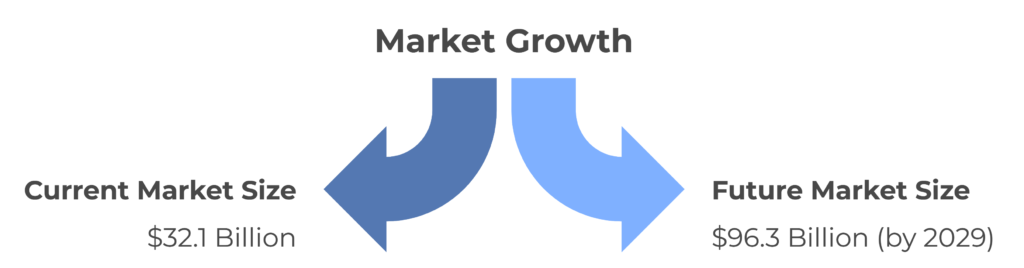
The AR & VR Market Is Worth an Estimated $22.1 Billion in 2024
The global augmented and virtual reality market is expected to be worth USD 96.3 billion by 2029. (Markets and Markets, 2024)
North America Is the Leading Region for Future Investment in Immersive Technologies
Austin Texas especially is one of the metros that are likely to invest in many smart city initiatives. (XRA, 2020)
The AR & VR Market Is Predicted to Nearly Double Between 2024 and 2028
The user penetration rate is projected to be 52.8% in 2024 and is expected to increase to 56.5% by 2029. (Statista, 2024)
User penetration rate is a rate that measures how many people use a product, compared to the total number of people in the target market of the product.
The Global Market for AR Glasses Is Projected to Reach 97.7 Million Units By 2030
This comes at a whopping expected growth at a compound annual growth rate of 84.7% over the forecast period. (Global Industry Reports, 2024)
North America Leads Global Extended Reality Market in 2022
Their market cap stands at $ 15.2 billion. (Market.US, 2024)
Augmented Reality IoT in Hospitals Will Have an Economic Value of 20-30 Billion U.S. Dollars by 2025
By 2030, this market is expected to grow between 40 and 90 billion U.S. dollars. (Statista, 2023)
The Mobile Augmented Reality (AR) Market Is Forecast to Reach 21 Billion U.S. Dollars by 2028
Revenue from this market comes from AR experiences on mobile devices, including apps, web AR, and visual search. (Statista, 2024)
The Number of Users in the AR Hardware Market Is Expected to Reach 143.5M Users by 2029
The U.S. and China are leading the market in technological advances in this market. (Statista, 2024)
In 2024, There Were an Estimated 1.03 Billion Mobile Augmented Reality Users Worldwide
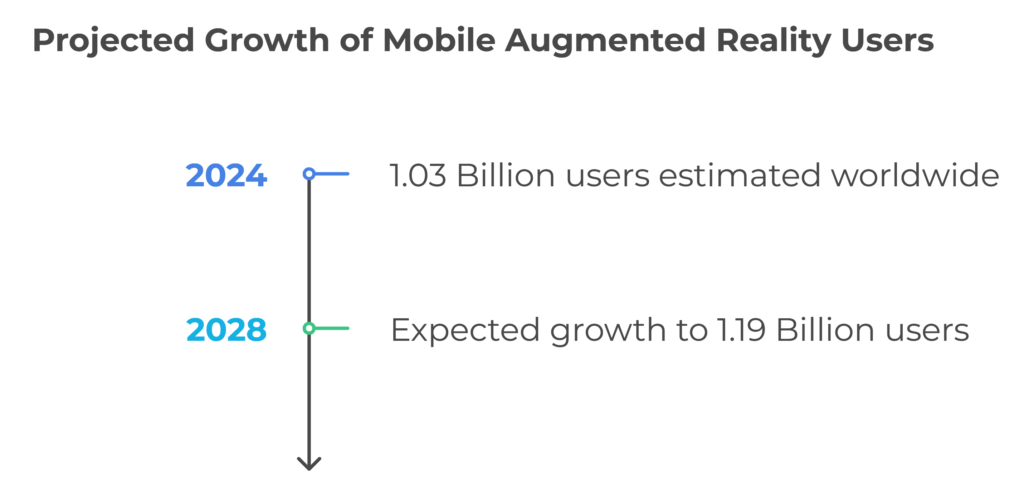
By 2028, this figure is expected to jump to 1.19 Billion. (Statista, 2024)
Over 32% of Consumers Currently Engage With AR Technology During Their Shopping Experiences
Enhanced device accessibility and improved user experience are some of the benefits of AR in the shopping space. (Market.us, 2023)
90% of Americans Either Currently Use AR in Their Shopping or Are Open to Adopting It
You can view more stats in the form of visuals here: Think With Google.
Of the people who have used AR in a shopping experience, 98% of them said it was helpful, which could lead to the rise of AR retailers in the future.
“Immersion” Is The Most Common Reason for Using AR
Immersion is when the user doesn’t perceive that they are in a virtual world. (Global Industry Reports, 2024)
98% of Consumers Who Have Already Used AR Report Finding It a Helpful Tool
This points to AR being a great tool that offers real value to consumers. (Market.US, 2024)
Lockheed Martin’s Shelley Peterson Reports Up to 90% Labor Cost Reduction from AR/VR on the Orion Spacecraft
This was reported by Nicole Lazzaro, president of XEODesign- an AR/ VR consultancy. (XRA, 2020)
Three in Four Interested Shoppers Say AR Shopping Could Lead to a Purchase
This shows a high level of AR shopping interest from consumers.
Here are some more findings from a Dynata report done in 2022:
Gen Z’s Augmented Reality Preference: 90%+ Interest Across Categories
Here are the stats for the different use cases of AR:
1. To see what a piece of furniture or home décor looks like in your home:
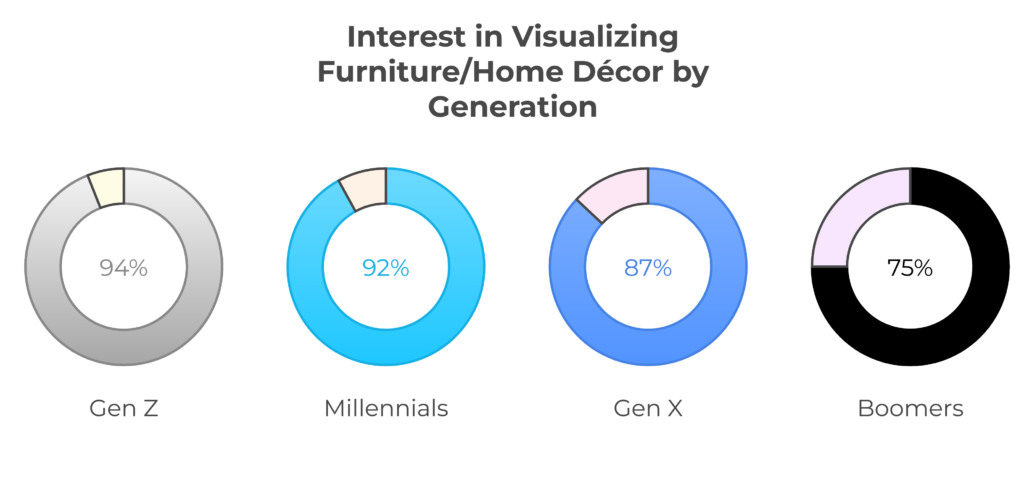
- Gen Z: 94%
- Millennials: 92%
- Gen X: 87%
- Boomers: 75%
- Silent Generation: 64%
2. For trying on new makeup or hair color (among women):
- Gen Z: 90%
- Millennials: 87%
- Gen X: 82%
- Boomers: 60%
- Silent Generation: 62%
3. When seeing what a new paint color would look like on your walls:
- Gen Z: 91%
- Millennials: 91%
- Gen X: 85%
- Boomers: 73%
- Silent Generation: 58%
4. Trying on new clothes, shoes, or accessories:
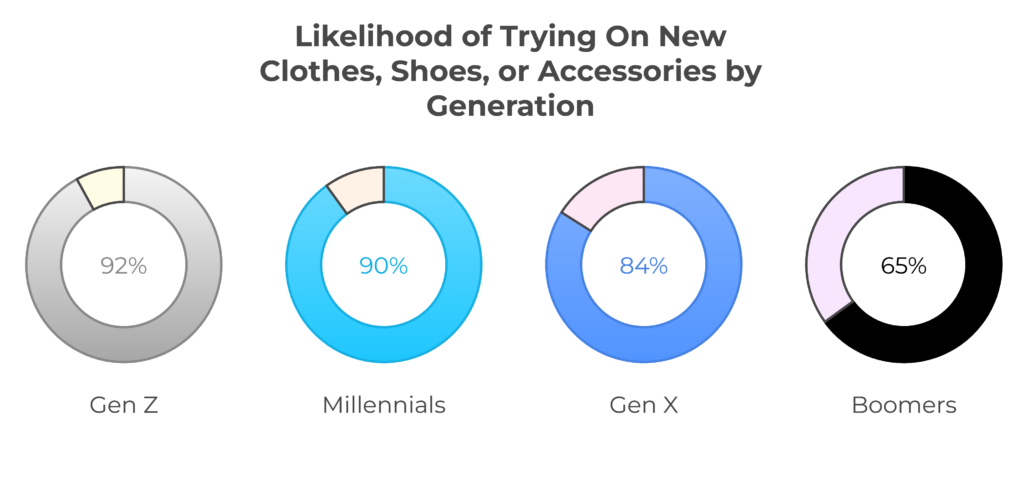
- Gen Z: 92%
- Millennials: 90%
- Gen X: 84%
- Boomers: 65%
- Silent Generation: 57%
Stay-at-Home Advantage: 45% Value Online Entertainment Convenience
Another 41% liked the fantasy aspect of being taken to another world, or experiencing a new life in an immersive feature.
Yet, not everyone prefers this over real-time interactions.
Virtual Reality Gap: 55% Miss ‘Being There’ in Online Experiences
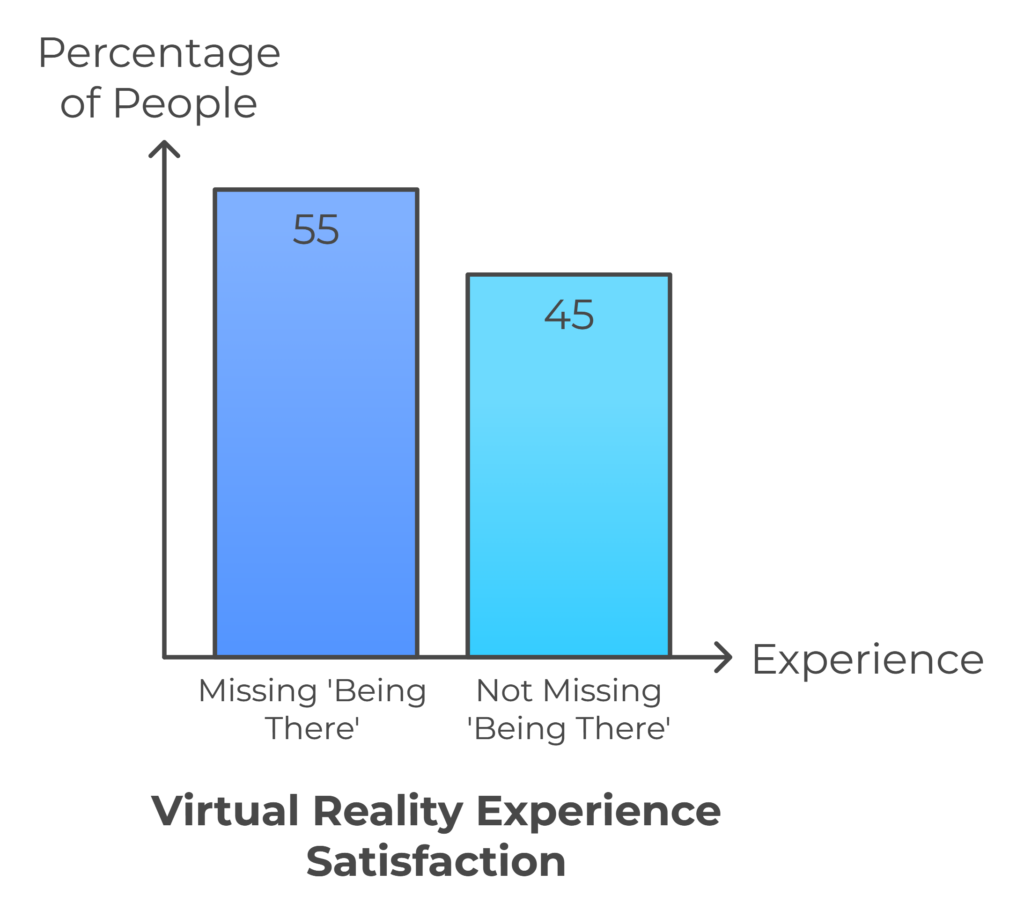
Yet, people value real-life experiences and say that there is something fundamentally lacking in online entertainment.
Up to 75% of Individuals Aged 16 to 44 Are Familiar with AR
In the U.S. around 80 million consumers claim they integrated AR into their monthly routines. (Market US, 2024)
AR Agriculture Market Valued To Reach $4.89 Million by 2027
This is growth at a CAGR of 34.49% during the forecast period of 2022-2027. (BIS Research, 2022)
AR in Hospitals Could Reach $90 Billion by 2030
AR can be used to help surgeons, for medical imaging, diagnosis, and physical therapy. (Statista, 2023)
Global AR/VR Market in Healthcare Expected to Reach Nearly $11 Billion by 2025
AR tech like simulated surgical training for doctors and nurses and 3D visualization of diseases at the molecular level are lucrative aspects for investment. (XRA, 2020)
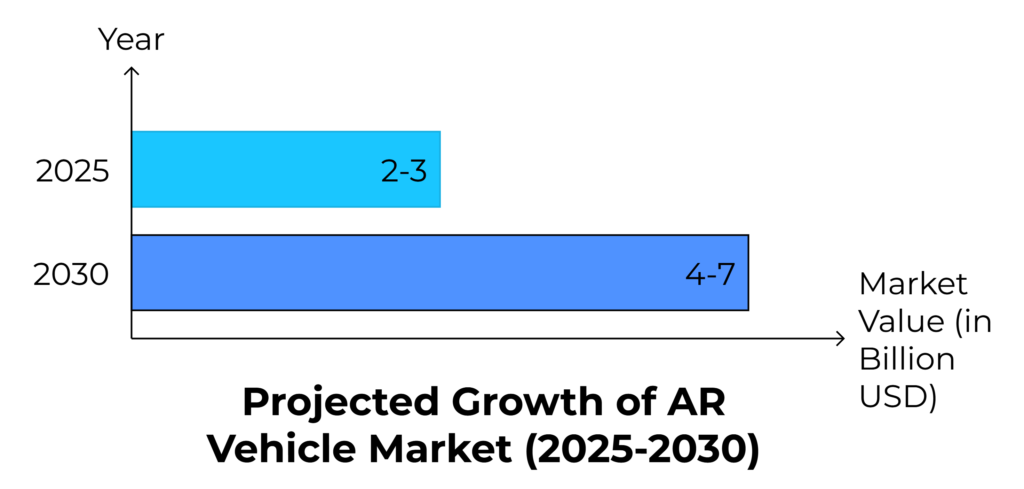
AR Vehicle Market Value Expected to Double from 2025 to 2030
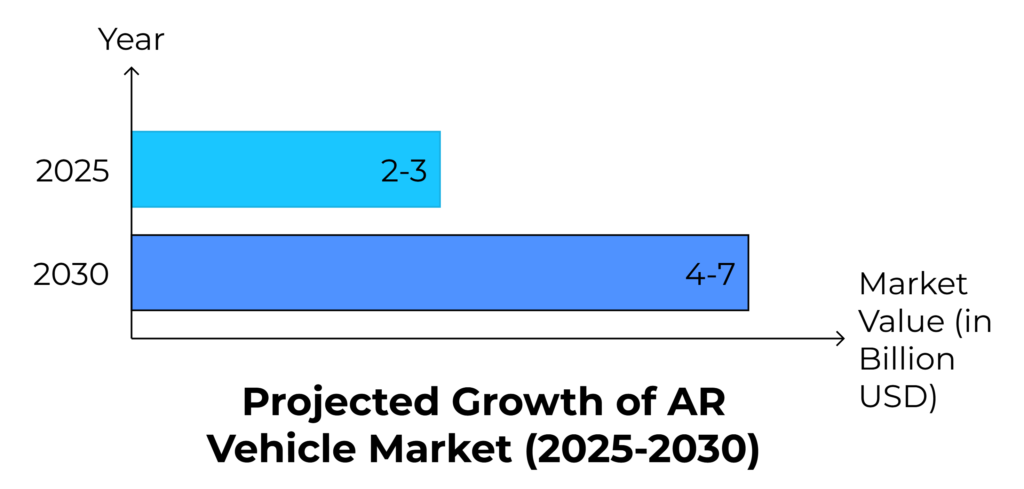
From 2 to 3 billion U.S. dollars by 2025, the AR Vehicle Market is expected to grow to 4 to 7 billion U.S. dollars in 2030. (Statista, 2023)
Zara Recently Featured AR Displays in 120 Stores Worldwide for Two Weeks in April
While other companies try to enhance the online shopping experience, Zara has incorporated them into stores itself. (Future Stores, 2024)
AR/VR Headset Market Expected to Ship 8.8 Million Units in 2026
Meta’s Oculus Accounts for Two-Thirds of XR Headset Shipments
It has maintained a clear lead from the year 2020, compared to others on the market. (IDC, 2024)
15 Percent of Those Users in an AR Report That They’ve Made the Leap to AR Glasses
This brings into focus the transition from hand-held devices to micro LED AR glasses like Xreal Air 2. (AR Insider, 2024)
On Average, High-End VR Glasses Weigh Over 7x More Than Lightweight Models
High-quality VR demands heavier devices. (VR Compare, 2024)
Mixed Devices Expected to Lead, Representing Over 70% of Volume by 2028
Mixed Reality devices combine AR and VR capabilities, they use a head-mounted device that can interact with the user through gestures. (IDC, 2024)
Almost One in Three Game Developers Create Games for the Oculus Quest
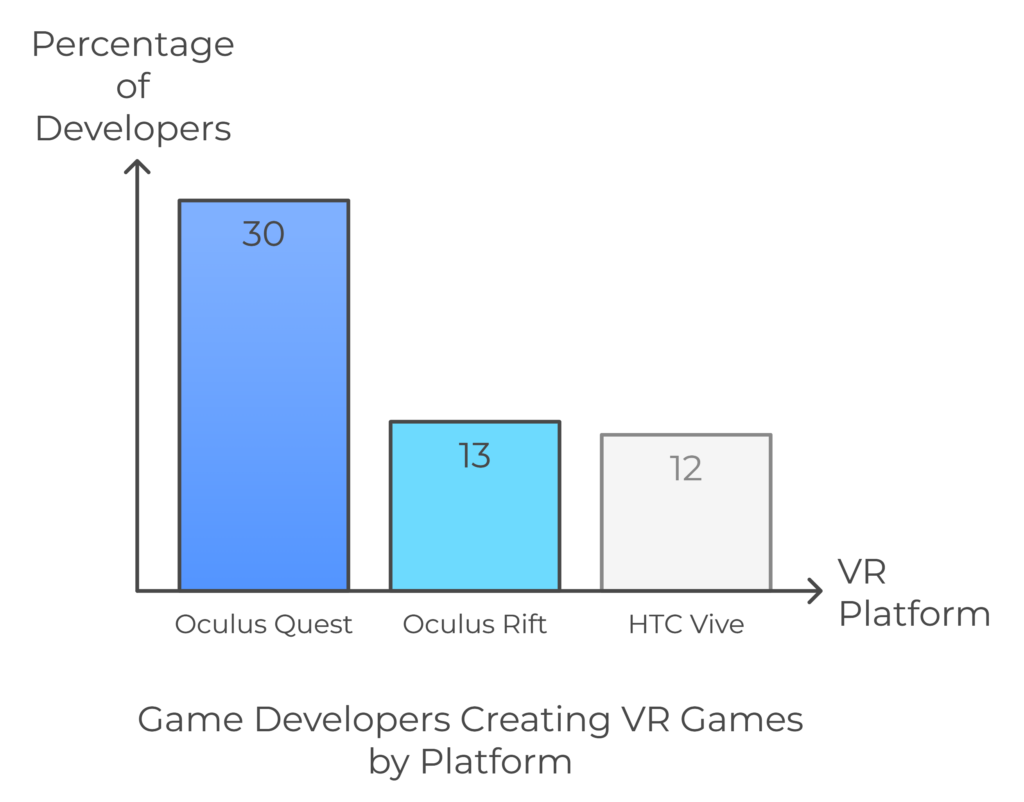
13% do so for Oculus Rift and 12% for HTC Vive. (Reg, 2022)
61% Cite Consumer Privacy/Data Security as a Legal Risk Concern
More companies are also addressing this issue and are updating their privacy policies. (XRA, 2020)
Final Thoughts on Augmented Reality
Can AI be used in tandem with AR to produce better experiences?
According to a blog by Ericsson, Generative AI could be used to support the creation of AR experience.
As an example, they mention how Meta’s Ray Bans could be used to integrate with an AI assistant that gives you real-time feedback for what it sees, such as suggestions for shopping.
With these types of innovations, the future for the global AR market does look quite interesting.

About the author
Editorial Staff
The Editorial Staff at Bot Memo is a team of writers, analysts, and AI agents dedicated to mapping the global AI startup ecosystem. Led by Chintan Zalani, the team tracks thousands of funding rounds, classifies companies across verticals, and distills it all into actionable intelligence for investors and founders.