

People who are afraid of flying are usually told that driving to the airport by car is the most dangerous option.
According to the National Safety Council, the odds of a fatal car accident are around 1 to 100.
That might soon change with AI, as the risks of car accidents have been reduced with it.
Let’s look at the various ways AI can benefit the transportation sector’s global market with further stats.
Key AI in Transportation Industry Statistics: Editor’s Choice
1. The global artificial intelligence (AI) in transportation market is expected to reach $7.81 billion by 2029.
2. Driver monitoring system market is anticipated to cross a value of $9.3 billion by 2033.
3. AI-enabled use cases have the potential to deliver 8 percentage points of the 37% reduction of emissions.
4. Customized AI model achieves 94.4% accuracy in pedestrian crossing prediction.
5. AI technology can effectively predict bus travel time in Sydney.
The Global Artificial Intelligence (AI) in Transportation Market Is Expected to Reach $7.81 Billion by 2029
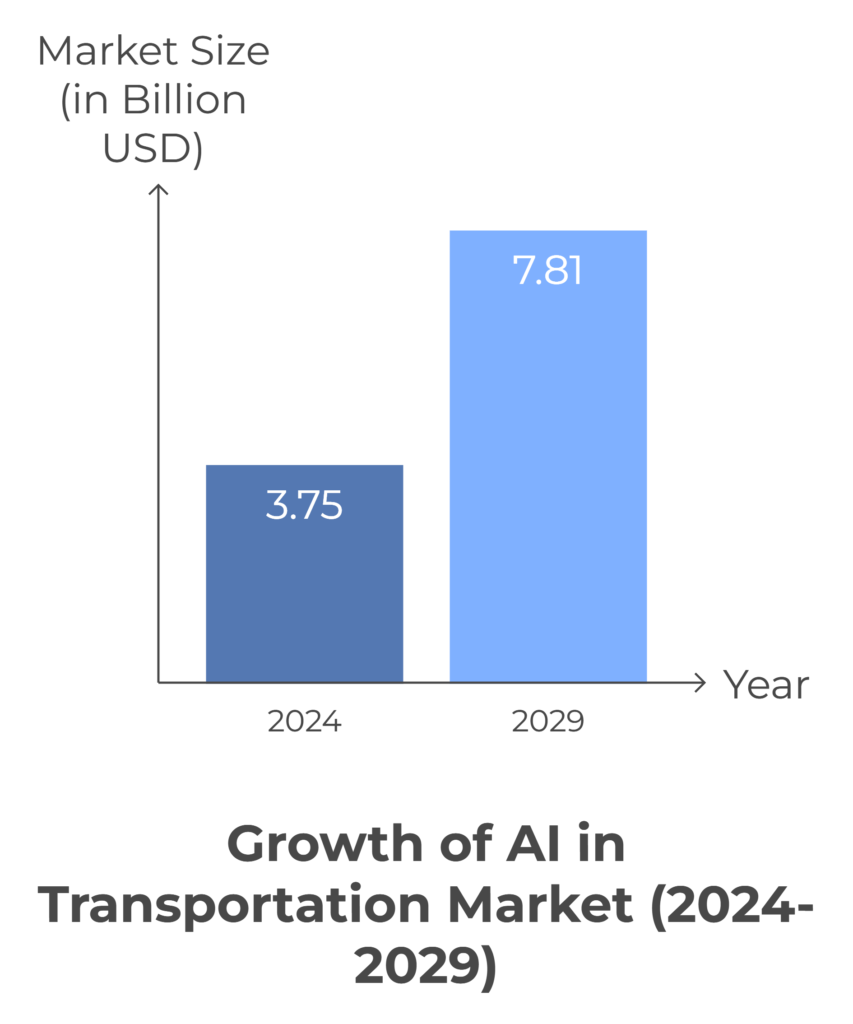
The transportation market size is forecasted to grow at a CAGR of 15.80% from 2024-2029. (Market Data Forecast, 2024)
North America Leads With 40.3% of the Market Share
North America dominates with its share of large industry players, such as Tesla, General Motors, and Ford. (Coherent Market Insights, 2024)
AI Transportation Industry Stats
AI has been used to improve logistic costs, aid global warming efforts, and drive growth in the driver monitoring system.
AI-Enabled Supply-Chain Management Has Enabled Early Adopters To Improve Logistics Costs by 15%
AI seems to drive supply chain growth, where key levels improved faster when compared to other companies that were slower in adoption.
Other aspects like inventory levels were improved by 35%, while service levels improved by 65%. (McKinsey, 2021)
AI-Enabled Use Cases Has Potential To Deliver 8 Percentage Points of the 37% Reduction of Emissions
It’s more than one-fifth required by 2030, as per the Paris Agreement goals for carbon emissions. (CapGemini, 2024)
Driver Monitoring System Market Is Anticipated To Cross a Value of $9.3 Billion by 2033
Increasing passenger traffic, along with a higher number of accidents are some reasons why monitoring systems are gaining importance. (Future Market Insights, 2023)
The Global AI in IoT Market Is Expected to Hit USD 34.33 Billion in 2029
It is expected to grow at a CAGR of 15% during the forecast period of 2024-2029. (Market Data Forecast, 2024)
The Software Segment Comprises 61% of the AI in Transportation Market Share
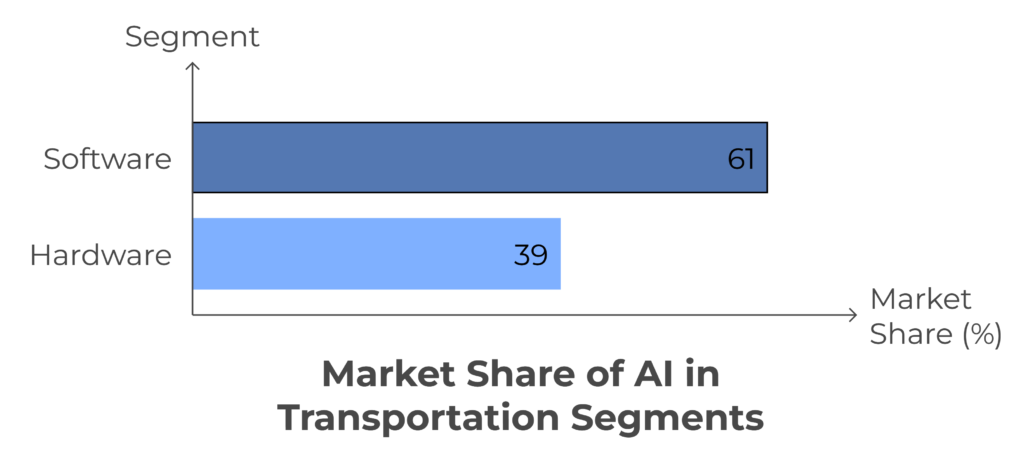
With the hardware segment taking up the other 39%. (Precedence Research, 2023)
The Deep Learning Segment Led in Revenue Share in the AI Transportation Market
This was in 2022, according to research by Strat View Research. (Strat View Research, 2023)
Autonomous Vehicles Enabled by AI Are Expected to Reduce Traffic Accidents by 90%
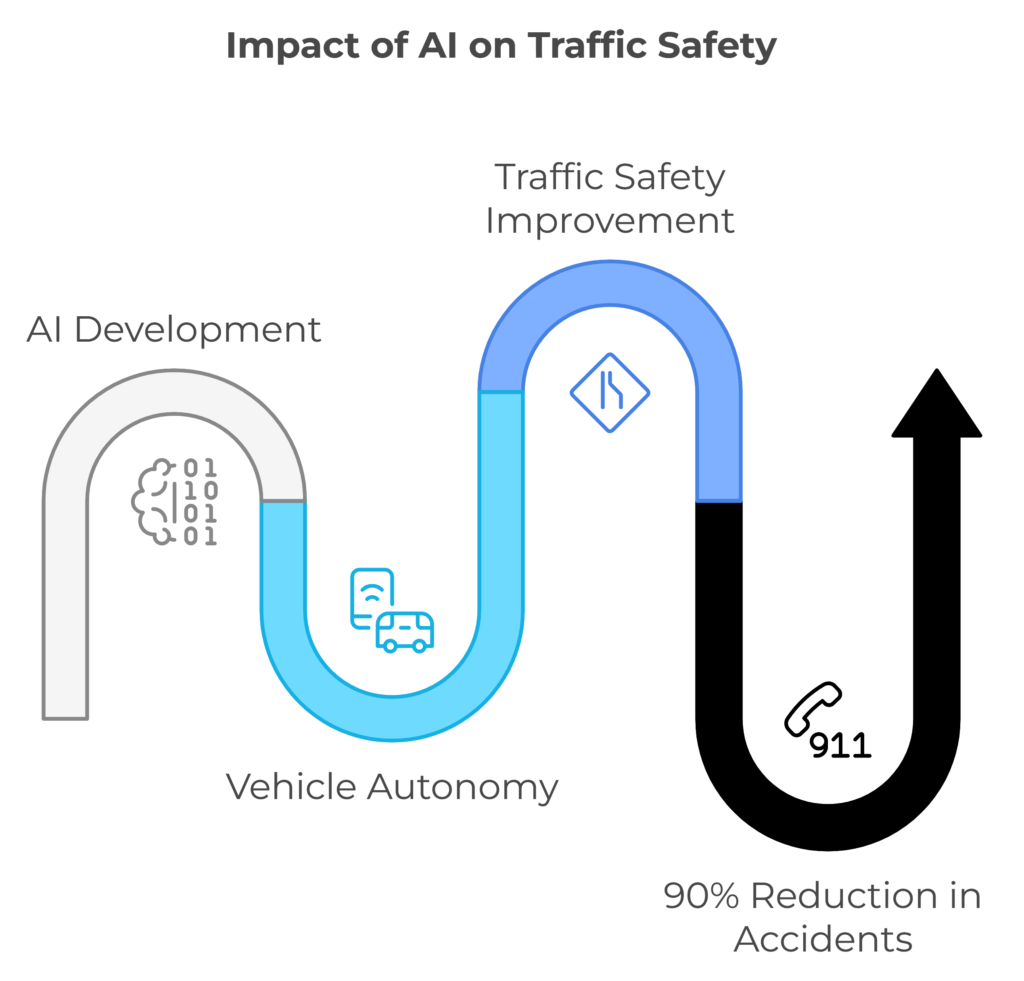
SAE Level 4 self-driving vehicles performed exceedingly, according to several metrics. (Nature, 2024)
AI-Enabled Intelligent Infrastructure Systems Will Communicate With Vehicles and Provide Real-Time Information
For example, smart traffic lights could dynamically adjust signal timings based on traffic conditions, and could optimize traffic flow.
Machine learning and AI technologies can gain a lot of information from sensors like GPS and even social media, to help predict traffic congestion and aid route planning. (Research Gate, 2023)
Vehicle Tracking Device Market Size Is Anticipated To Register a CAGR of Over 15%
This was for the forecast period of 2023 to 2032.
The market was valued at $28.6 Billion in 2022, and this market is partly due to the rise of incidents of vehicle theft. (GMI Insights, 2023)
Global Autonomous Car Market Expected to Grow to Nearly $62 Billion by 2026
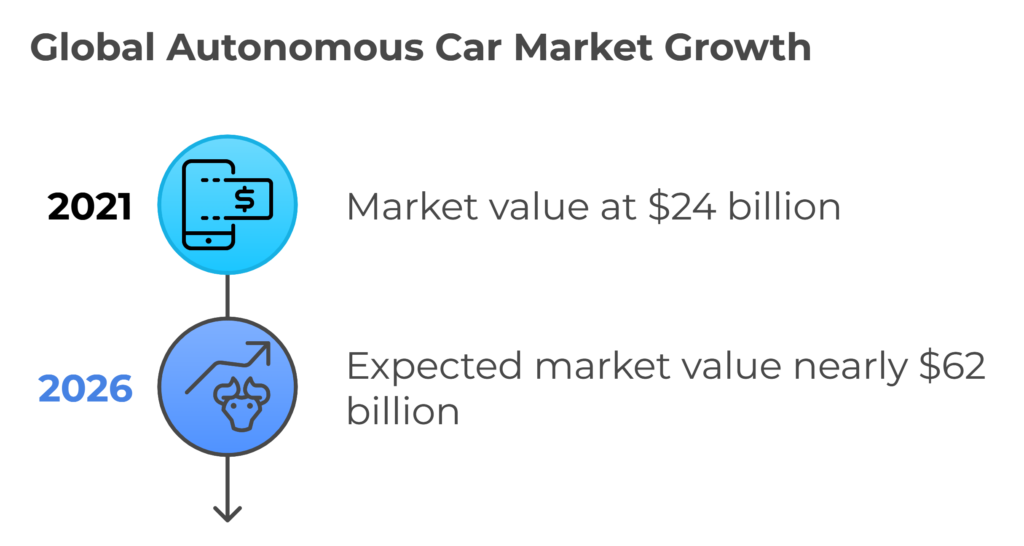
This is a leap from the 2021 value of $24 billion. (Statista, 2023)
The Number of Cars with Some Level of Inbuilt Automation Will Surpass 54 Million in 2024
In 2019, there were around 31 cars that had some level of automation. (Statista, 2023)
AI in Roadway Safety Statistics and Facts
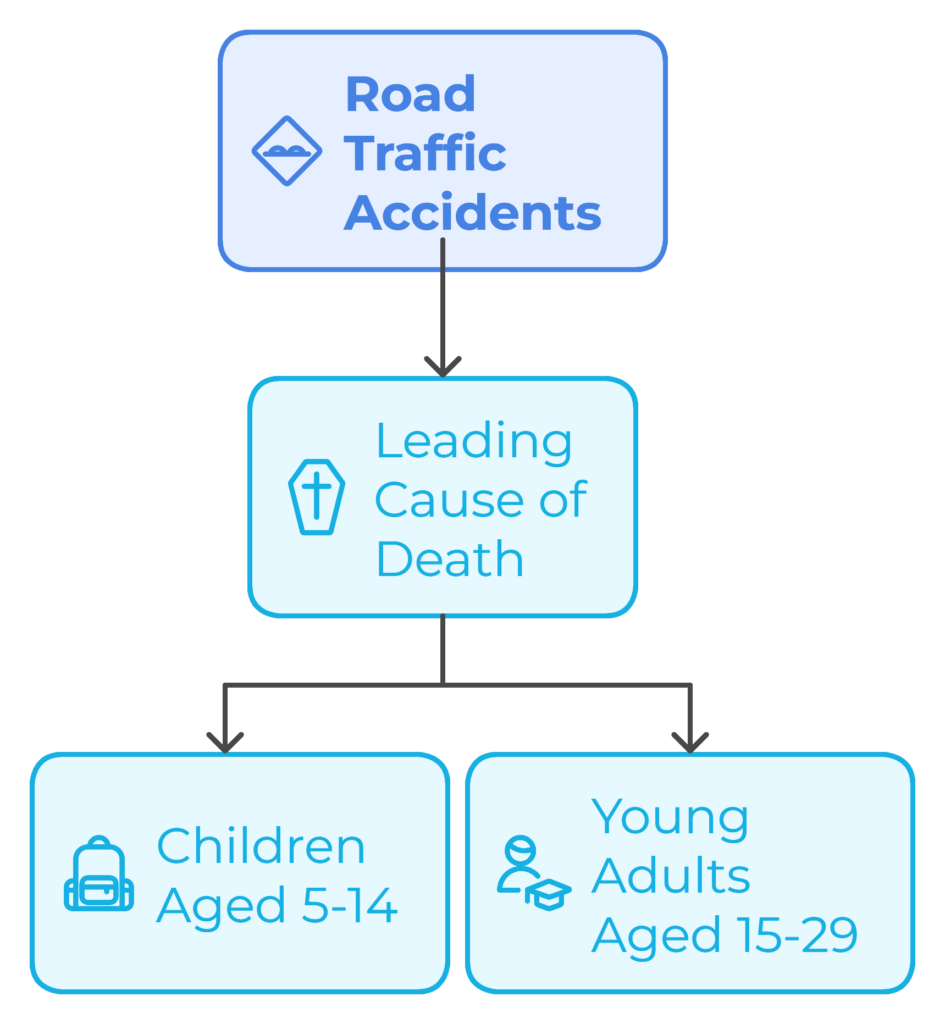
Approximately 1.19 million people die each year as a result of road traffic crashes, according to The World Health Organization.
Road traffic accidents are also the leading cause of children and young adults of ages 5 to 29 years.
Let’s look at some use cases on how artificial intelligence can be applied to road safety.
Computer Vision-Based Pothole Detection Algorithm Achieved an Overall Accuracy of 98.7%
Classification models show very high accuracy in detecting many types of pavement distresses. (MDPI, 2022)
PI-Net Achieves 94.4% Accuracy in Pedestrian Crossing Prediction
To the best of the author’s knowledge, SPI-Net was the state-of-the-art for the C/NC task on the JAAD data set in 2020. (Research Gate, 2020)
C/NC stands for Crossing/Not Crossing and Joint Attention in Autonomous Driving (JAAD) is a public data set, that is a benchmark in the field.
Deep Learning Method Delivers 80% to 98% Accuracy For Traffic Analysis With Single Camera View
In the paper, the authors adopted the object detection algorithm- Yolo (You Look Only Once), which trained on the MS-COCO dataset for the vehicle detection process. (MDPI, 2020)
Google’s AI Model Uses Maps Data and AI to Optimally Adjust Traffic Signal Timings
It also helps reduce vehicle emissions along with stop-and-go traffic. (Google, 2022)
AI Technology Can Effectively Predict Bus Travel Time in Sydney
Modern urbanization has caused a lot of traffic congestion, and the proposed model published in Springer takes this into consideration in their predictions. (Springer, 2021)
Challenges of Implementing AI in The Transportation Sector
There are quite a few challenges in actually adopting AI for the transportation market.
A few of them are lack of standardizations, costs, and security and privacy concerns.
Let’s explore them further.
Global Artificial Intelligence In Transportation Market Is Expected To Reach $6.51 Billion By 2031
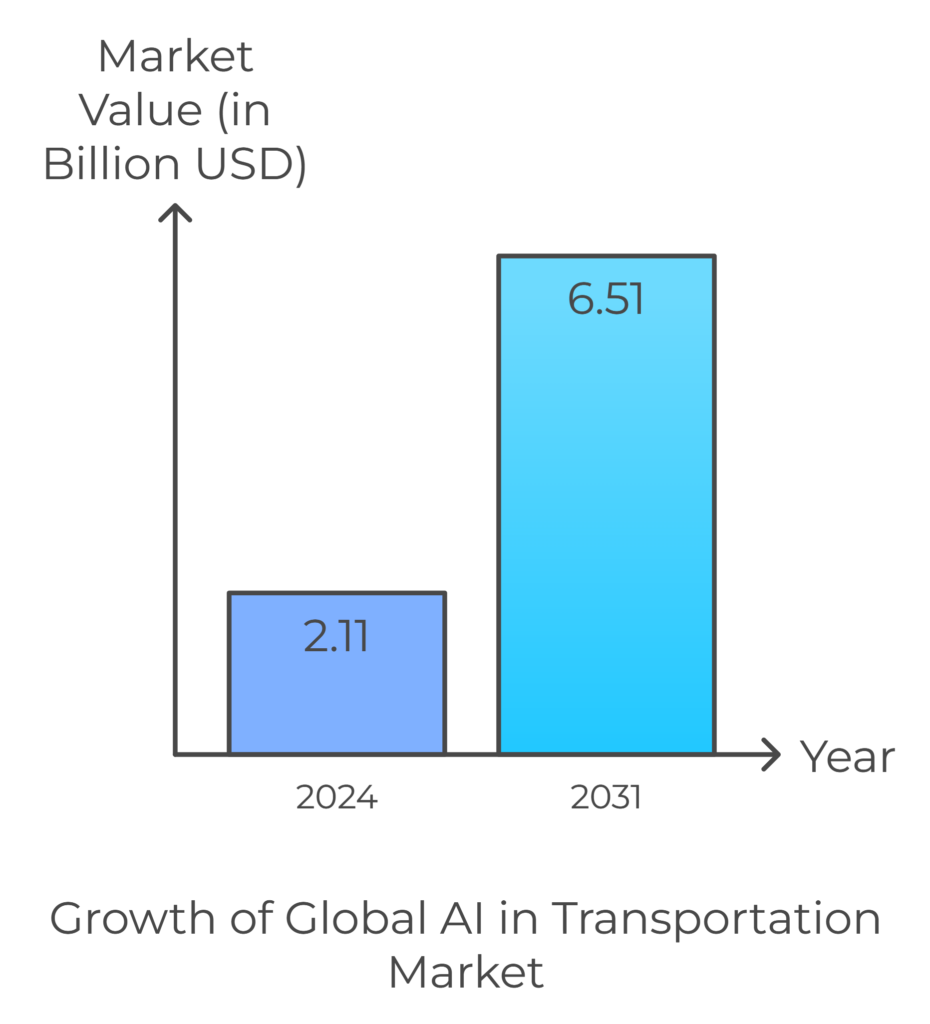
As of now, in 2024, it is valued at $2.11 billion.
In the future, a CAGR of 17.5% is expected from this, from 2024 to 2031. (Coherent Market Insights, 2024)
Lack of Standardization in AI Systems
Popular companies like Tesla and Uber use different AI systems for developing their advanced driver assistance systems.
Yet the lack of uniformity makes it hard for these systems to communicate. (Coherent Market Insights, 2024)
Security and Privacy Concerns
Transportation is increasingly relying on AI systems that collect vast amounts of data, so they should be careful concerning cyber threats. (Market.us, 2024)
77% of T& L Companies Cite Barriers to Tech Implementation
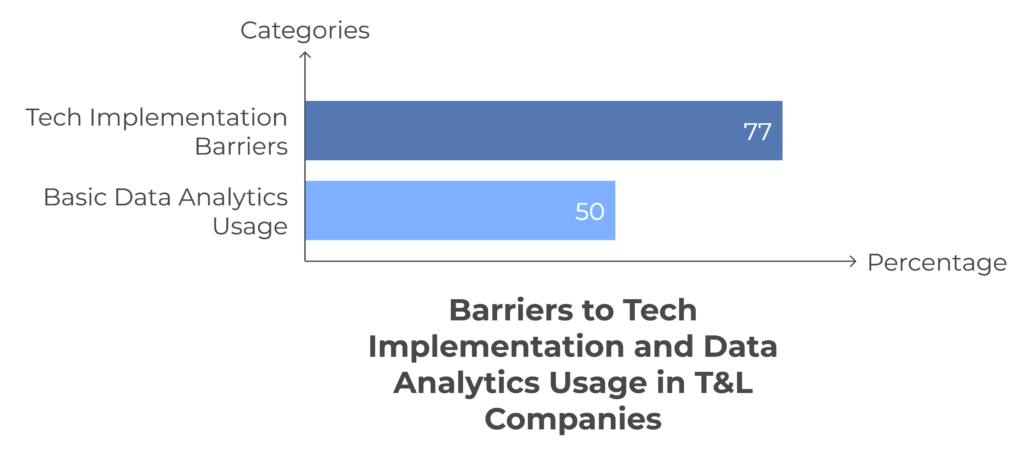
50% do not use even basic data analytics in their supply chain management. (Here, 2024)
Only 25% Leverage AI in Supply Chain Management
The lack of popular AI adoption in the supply chain industry is also an issue, according to the 2024 report by Here. (Here, 2024)
Final Thoughts: Where Will AI Take The Transportation Industry
Let’s look at some futuristic use cases of AI in the transportation industry:
- Autonomous vehicles: The EU Parliament has developed a strategy for automated mobility, which you can check out on YouTube. You can also look for updates by major companies like Tesla in this space.
- Improved Safety: Improved safety is a very important and beneficial area where AI models can be used. YOLO AI models have already achieved high accuracy in pedestrian detection. Advanced driver assistance, predictive maintenance, and real-time monitoring are also key areas to look out for.
- AI-driven logistics: The logistics sector will continue to benefit from AI advancements in predictive analytics, demand forecasting, and supply chain optimization. These technologies will help supply chain companies to cut costs, streamline operations, and make service deliveries more efficient.
- Sustainability: More efficient routes as well as autonomous electric vehicles can also help achieve sustainability goals and cause less emissions, leading the way to a brighter and cleaner future.