

How to Think About “Making” a Billion Dollars
Alex Hormozi, entrepreneur and co-owner of Skool, states, “The key to becoming a billionaire is to own assets that are worth a billion dollars. It’s about creating and managing high-value businesses and investments.”
He emphasizes that owning a company with $80-100 million in EBITDA or profit can help you achieve billionaire status.
He then says, “You need to identify opportunities with no time constraints and high gross margins.
“Think on a very long time horizon to achieve incremental progress and measurable milestones rather than focusing solely on the ultimate goal.”
What Are The Top Billion-Dollar Industries?
Based on IBISWorld’s analysis of its database of 1,300+ US industries, here are the top 5 biggest industries by revenue in the US for 2024:
1. Commercial Banking: Generates revenue primarily through loans and financial services regulated by federal entities.
2. Hospitals: Central to healthcare delivery, hospitals earn through specialized and emergency care services.
3. Drug, Cosmetic & Toiletry Wholesaling: Driven by demand for pharmaceuticals and personal care products, especially generics.
4. Health & Medical Insurance: Grows through premiums correlated with healthcare expenditure and medical cost inflation.
5. Pharmaceuticals Wholesaling: Earns revenue by distributing medications, benefiting from an aging population and higher physician visits.
Brad Jacobs, a billionaire and the author of ‘How to Make a Few Billion Dollars,’ shares a simple strategy for selecting industries, “Focus on industries with long-term growth potential and favorable economic trends.”
Indeed many odd industries can also generate billions in revenue. Business Insider’s deep dive shares some of these in the video below. Examples include swiftlet bird nests, electronic waste recycling, the acai berry industry, and aloe vera products.
Artificial Intelligence Business Ideas
The global Artificial Intelligence market is projected to reach $184 billion in 2024, with a CAGR of 28.46%, growing to $826.7 billion by 2030, with the US leading at $50.16 billion in 2024.
1. AI Elearning Platform
AI eLearning platform makes education more accessible and tailors content to individual needs, enhancing user engagement and knowledge retention.
The eLearning market reached a value of $210.1 billion in 2021 and is projected to exceed $848.12 billion by 2030.

Teachmint, for instance, offers AI-connected classroom technology, featuring an interactive flat panel that leverages cloud & AI in around 50+ countries.
It supports 17 languages with dynamic lesson planning, interactive in-class engagement, and post-class management. Teachmint enhances educational ecosystems from K-12 to higher education.
2. AI Healthcare Solutions
AI healthcare solutions revolutionize the medical industry by improving diagnostic accuracy, patient outcomes, and administrative processes. It can reduce costs and has immense growth opportunities, making it a viable path to building a billion-dollar enterprise.

Tempus, for example, utilizes AI to accelerate precision medicine by discovering novel targets, predicting treatment effectiveness, and identifying life-saving clinical trials.
Their innovative technology aids in early disease diagnosis and enables physicians to make informed treatment decisions. Tempus has extensive healthcare partnerships and over $1.3 billion in funding.
3. AI Financial Services
The McKinsey Global Institute estimates that general artificial intelligence (gen AI) could add up to $4.4 trillion annually across various industries globally, with banking presenting a potential opportunity worth between $200 billion and $340 billion annually.
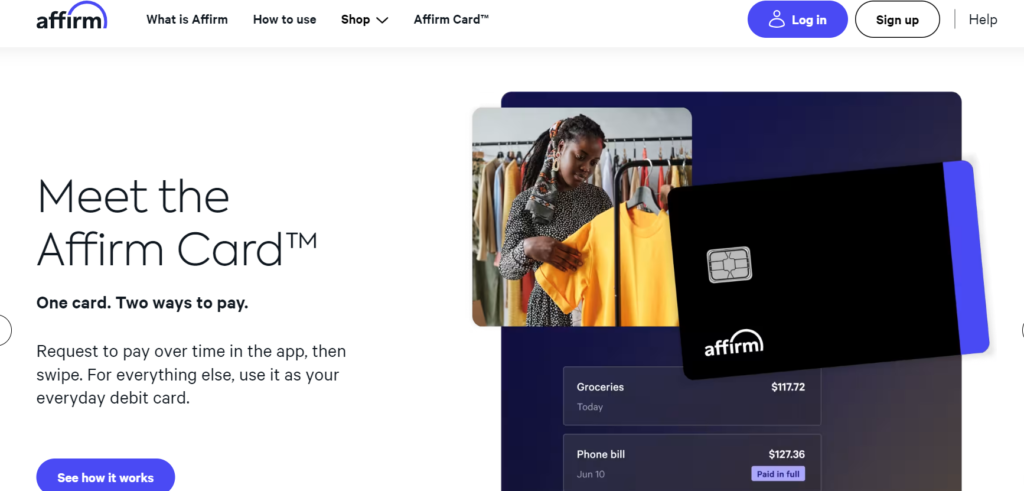
Affirm, to illustrate, utilizes AI for financial services by providing personalized loan options, predicting purchasing power, and offering flexible payment plans.
Customers can pay with the ‘Affirm Card’ or through the Affirm app, which uses AI to assess credit risk and tailor financing options.
Businesses benefit from digital wallet integrations, enabling them to offer interest-free payment options and improve customer purchase experiences.
4. AI Logistics and Supply Chain Management
Dwight Klappich, VP Analyst at Gartner, says “Emerging and maturing supply chain technology is a major source of competitive advantage.
It’s good that supply chain technology gets the attention it deserves. However, emerging supply chain management technologies are often overhyped, and leaders must aim to fully understand the risks and opportunities associated with each new technology.”
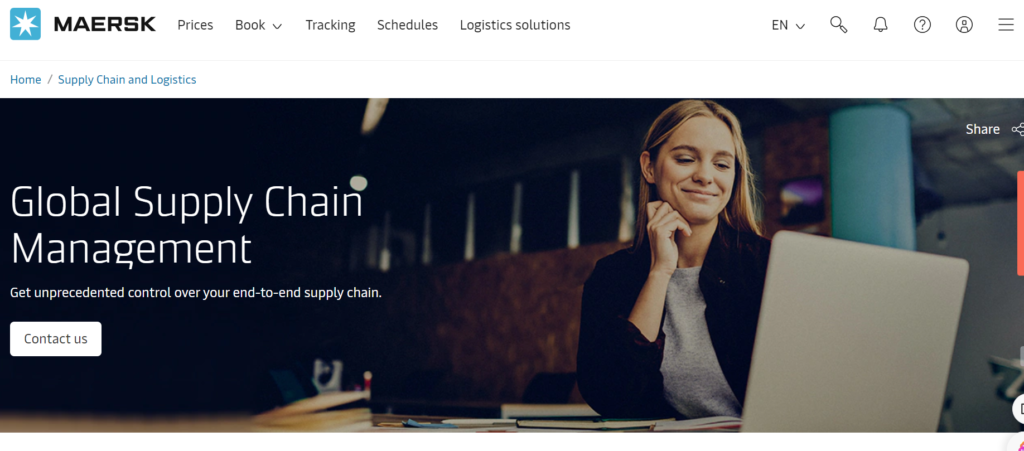
Maersk, for instance, offers supply chain management (SCM) services with end-to-end logistics, enhancing visibility and resilience.
Maersk’s SCM solutions streamline supply chains with modern technology platforms, ensuring integration and real-time management.
It helps businesses achieve their logistics objectives, from handling exceptions smoothly to optimizing global supply chain processes.
5. AI Content Creation Tools
Julia McCoy, Creator and Co-founder of Content Hacker, emphasizes the transformative potential of AI in content creation, stating, ”Remember the time when creating content was a long, painstaking process?
Those days are becoming a distant memory. AI-powered content creation is here and it’s changing the game.
With AI tools offering not just speed but also the ability to analyze data, personalize messages at scale, and keep social media buzzing with engaging posts, the future of content creation is poised for significant evolution”.
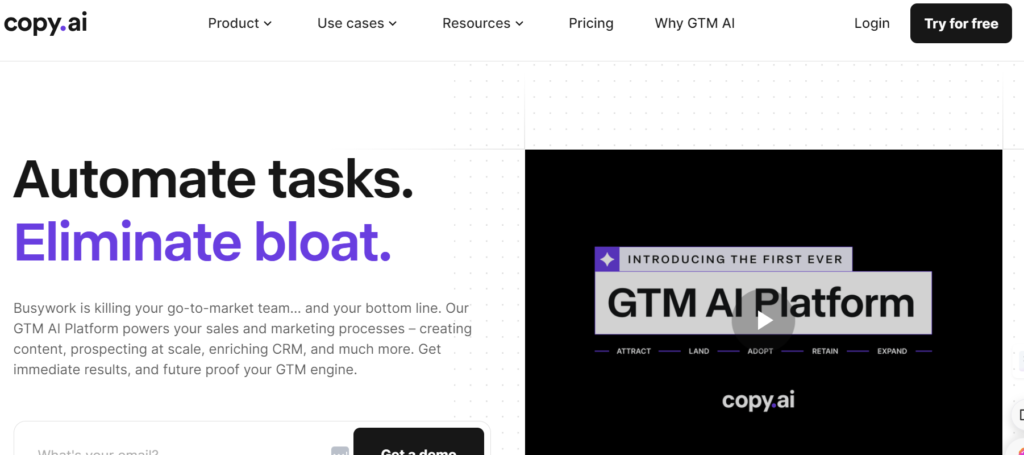
Copy.ai, for example, is a GTM AI platform that automates sales and marketing processes, with high-quality data and over 2,000 integrations.
It offers pre-built workflows and customizable solutions for creating content, generating demand, and enriching CRM systems. The platform ensures security and flexibility, future-proofing your business for an AI world.
6. AI Retail and Ecommerce Solutions
The influence of AI on the global Ecommerce landscape is revolutionary, with the potential to escalate the market size of AI in Ecommerce from $8.06 billion in 2024 to $14.07 billion by 2028, boasting a compounded annual growth rate (CAGR) of 14.9%.

ITRex, to illustrate, provides AI solutions for retail and Ecommerce, improving operational processes and personalizing customer service.
They specialize in data mining, natural language processing, and computer vision to improve sales forecasting, customer engagement, and inventory management.
ITRex helps retailers harness AI to increase sales, optimize customer interactions, and implement autonomous shopping systems.
7. AI Chatbot Service
An AI chatbot service has the potential to grow into a billion-dollar enterprise due to its ability to automate customer interactions, reduce operational costs, and enhance customer satisfaction.
The global AI chatbot market is projected to grow from $6.4 billion in 2023 to approximately $66.6 billion by 2033, with a compound annual growth rate (CAGR) of 26.4% from 2024 to 2033.

Intercom, for instance, is an AI customer service platform with its ‘Fin AI Copilot’, providing instant support through AI agents and real-time assistance for support agents.
The platform includes AI tools for customers, support agents, and leaders, ensuring better customer service operations. Intercom integrates robust reporting, automated workflows, and omnichannel support.
Intercom secured $125 million in Series D funding, raising its total funding to date. The company operates in the customer communication software sector and is poised for significant growth with this latest investment.
8. AI Agriculture Solutions
The AI in agriculture market is forecasted to surge from $1.7 billion in 2023 to $4.7 billion by 2028, underscoring the indispensable role of advanced technologies in shaping the future of agriculture.

IUNU, for example, utilizes artificial intelligence, computer vision, and data to optimize agricultural operations, offering solutions for autonomous growing and data collection.
Their technology simplifies task management, optimizes crop strategies, and enables remote facility management, helping top growers reduce labor, increase yields, and boost profits.
It automates processes like germination counts and saves growers significant time, allowing them to focus on higher-value tasks.
9. AI Cybersecurity Solutions
The global AI in cybersecurity market is projected to reach $60.6 billion by 2028, up from $22.4 billion in 2023, and grow at a CAGR of 21.9%.

CrowdStrike, to illustrate, offers a unified AI-native XDR platform for cybersecurity. It provides advanced solutions like cloud security, identity protection, and next-gen SIEM for real-time threat detection and protection.
CrowdStrike raised $100 million in funding, totaling $156 million raised to date. The importance of cybersecurity highlights its substantial potential for future growth and innovation.
10. NFT Platform with AI Integration
Jimmy Mouton, VP of Marketing at NFT marketplace Nifty’s, calls NFTs “a tool for community building.”
The global NFT market is expected to reach $122.43 billion by 2028, driven by increasing adoption in various industries and the unique capabilities of AI to enhance user experiences, automate processes, and provide advanced analytics.

Element, for instance, is a marketplace featuring NFT collections within the anomaly universe, offering unique digital assets and access to exclusive content.
The platform provides real-time data tracking on collections, floor prices, and trading volumes, supporting users with verified collection and creator services.
Digital Commerce and Services
The global digital commerce market is projected to reach $10.32 trillion by 2028, driven by increasing internet penetration, mobile device usage, and consumer preference for online shopping.
11. On-Demand Food Delivery
The online food delivery market is forecasted to reach $1.22 trillion in revenue in 2024, with a CAGR of 9.49%, projected to grow to $1.92 trillion by 2029.

DoorDash, for example, offers on-demand delivery services including groceries, convenience items, flowers, pet supplies, and even liquor delivered, while also handling package returns and more. DoorDash has raised a total of over $2.5 billion in funding.
12. Web3 Ecommerce Platform
A Web3 Ecommerce platform utilizes blockchain technology to decentralize, secure, and transparent online marketplaces.
You can offer unique features like cryptocurrency payments, NFT integration, and smart contracts, positioning yourself at the forefront of the next digital commerce revolution.
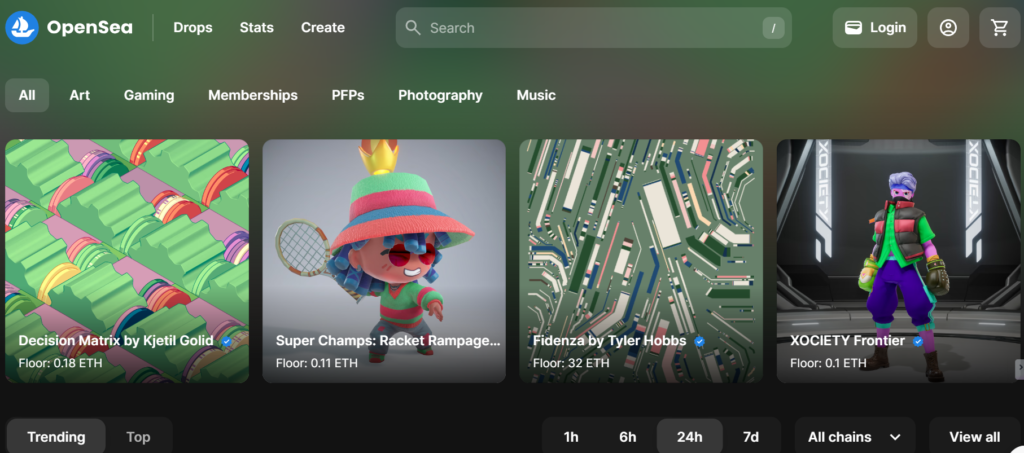
OpenSea, to illustrate, is a digital marketplace for crypto collectibles and non-fungible tokens (NFTs), offering a platform to buy, sell, and discover exclusive digital items.
The site features a wide range of categories, including art, gaming, memberships, and photography, with real-time data tracking on collection floor prices and trading volumes.
OpenSea has raised $425.12 million in total across 6 funding rounds, with its latest Series C round in January 2022 securing $300 million.
13. Multi-Vendor Marketplace
A multi-vendor marketplace attracts a large customer base and also offers scalable growth opportunities, making it a potential billion-dollar business idea.

Etsy, for instance, is a global online multi-vendor marketplace where individuals can buy, sell, and collect unique items, supporting independent creators without the need for warehouses.
The platform offers a wide range of personalized gifts and various categories, making positive changes for small businesses, people, and the planet.
Etsy has secured $98 million in total funding through 13 rounds from 23 investors. Etsy’s revenue for the twelve months ending March 31, 2024, stood at $2.753 billion, reflecting a 4.78% year-over-year increase.
14. Insurance Aggregator App
An insurance aggregator app has the ability to compare multiple insurance policies and find the best deals, providing substantial growth opportunities.
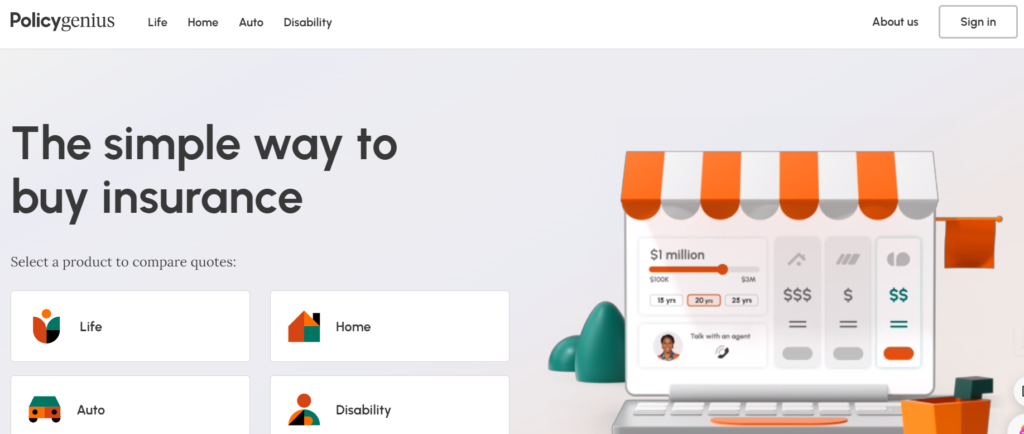
Policygenius, for example, simplifies the process of buying insurance by allowing users to compare quotes for life, home, auto, and disability insurance from top-rated insurers.
Policygenius combines smart tools, human support, and industry-leading security practices to provide a trusted, independent platform for finding the best insurance coverage.
Policygenius has raised a total of $276.1M in funding over 7 rounds.
15. Create An Instagram / YouTube Channel
Creating an Instagram or YouTube channel is a promising business idea due to the vast monetization opportunities and the growing digital content consumption. These platforms can generate revenue through ads, sponsorships, and merchandise sales.
Jordan Welch, a YouTuber, reveals fascinating insights into the earnings of top YouTubers.
Welch highlights how creators like Airrack went from making seven cents to $480,000 a month in just two years, showcasing the immense potential and rapid growth within the platform.
These YouTubers utilize Google AdSense to increase their viewership and engagement, thereby maximizing their monthly earnings.
16. Real Estate Business
The global real estate market size is expected to reach $5.85 trillion by 2030, registering a CAGR of 5.2% from 2022 to 2030, driven by increasing urbanization, population growth, and rising demand for residential and commercial properties.

Zillow, for instance, offers a real-estate platform for buying, selling, and renting homes, providing users with an immersive photo experience and the largest listing network.
The platform facilitates transactions, from finding a home to securing a mortgage and managing rentals. Zillow’s personalized recommendations enhance user experience by suggesting homes based on location, search activity, and saved preferences.
Zillow Group’s Q4 revenue surpassed expectations at $474 million, up 9% year over year, while full-year revenue was $1.9 billion, slightly lower by 1% compared to the previous year.
17. Waste Management Business
The global waste management market size was valued at $1,293.70 billion in 2022 and is expected to grow at a compound annual growth rate (CAGR) of 5.4% from 2023 to 2030.
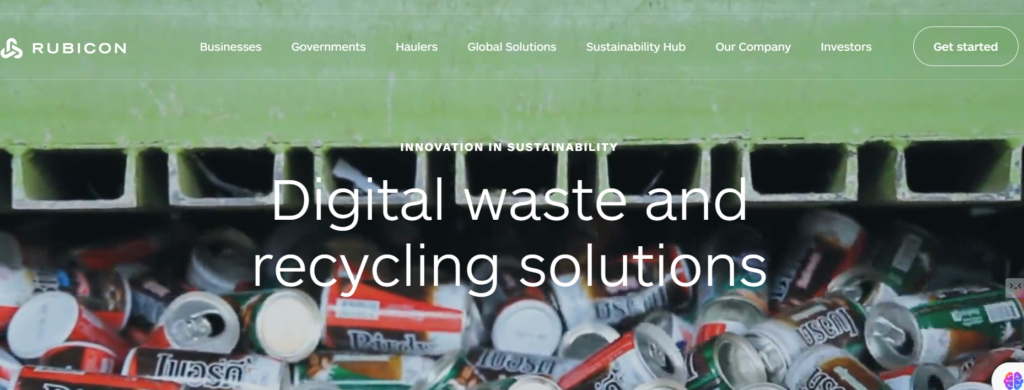
Rubicon, for example, provides digital waste and recycling solutions to help businesses, cities, and haulers optimize and reduce waste.
Their software platform serves over 13 million service locations and 8,000 customers across industries, promoting sustainability and efficient waste management. It has operations in more than 100 cities globally. Rubicon Technology has raised $2.2B across 3 funds on Nov 6, 2023.
Emerging Technology Solutions
Emerging technology solutions present business opportunities in AI, IoT, blockchain, and 5G. These technologies drive innovation and create new revenue streams, positioning businesses for market leadership.
18. EV Charging Station App
By 2040, the EV charging market could surge from $7 billion to $100 billion, with a robust annual growth rate of 15%.

ChargePoint, to illustrate, provides EV charging solutions for businesses, fleets, and drivers, aiming to simplify the transition to electric mobility.
Their platform supports every make and model of EV, offering flexible software and hardware solutions that enhance driver experience and operational efficiency. ChargePoint has powered 10 billion electric miles and avoided 2.2 million metric tons of GHG emissions.
19. Metaverse Skill Development Platform
The global metaverse market size is anticipated to grow from $83.9 billion in 2023 to $1,303.4 billion by 2030 at a compound annual growth rate (CAGR) of 48.0% during the forecast period.
A metaverse skill development center is driven by advancements in VR, AR, and blockchain technologies, positioning it as a lucrative billion-dollar opportunity.
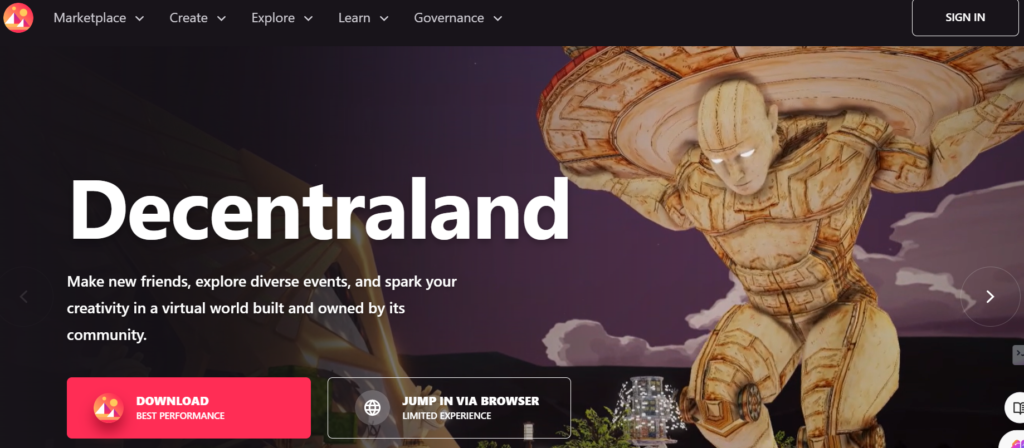
Decentraland, for instance, offers a virtual world where you can create, explore, and govern a dynamic social environment. You can customize their digital identity with wearables, buy or rent land, and animate avatars with emotes.
The platform supports creators with tools to publish and manage assets, while the decentralized autonomous organization (dao) allows you to influence the virtual world’s operations. Decentraland has secured $25.5 million in funding across 6 rounds.
20. Virtual Travel & Tourism Business
In 2021, the global virtual tourism industry was valued at $5 billion, with projections indicating significant growth to surpass $24 billion by 2027.
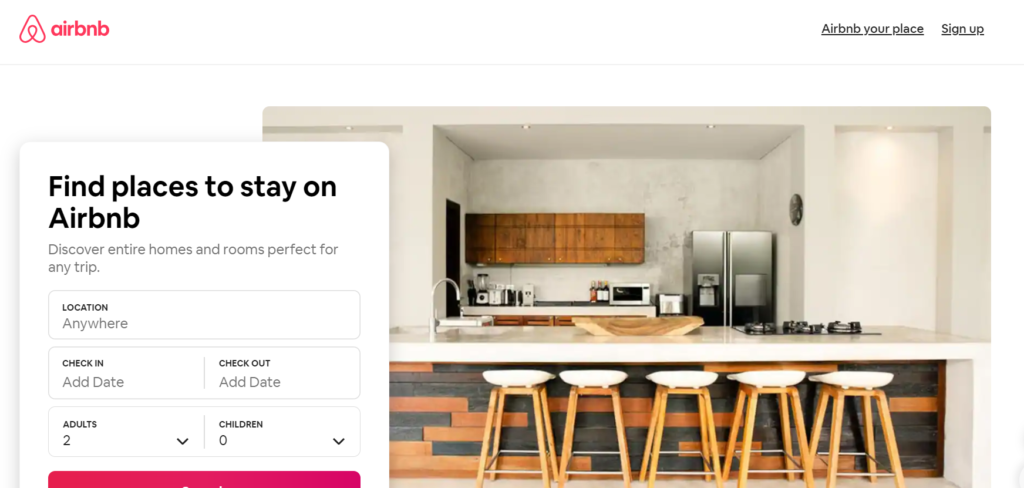
Airbnb, for example, offers over 7 million active listings worldwide, allowing guests to find entire homes, flats, or rooms for any trip.
You can choose stays with flexible cancellation options and utilize 100+ filters to tailor your search to specific needs. with properties ranging from houses to unique accommodations, Airbnb caters to a diverse array of preferences and travel plans.
Fintech and Financial Services
The global fintech market is projected to be valued at $312.92 billion in 2024 and is expected to grow to $608.35 billion by 2029, with a CAGR exceeding 14% during the forecast period (2024-2029)
21. NEO Bank
The NEO Bank offers digital banking experiences without the need for physical branches, capitalizing on the growing shift towards convenience financial services.
Chime, to illustrate, is a financial technology company offering fee-free banking services, including early direct deposits, credit building, and overdraft protection.
It provides users with an online banking experience through its partnership with The Bancorp Bank, N.A., and Stride Bank, N.A., with over 60,000 fee-free ATMs available. It has features like fee-free overdrafts, early paycheck access, and a high-yield savings account.
Chime is that it is reportedly planning to go public in 2025, according to a report by Bloomberg. While Chime has yet to engage investment banks for this purpose, the NEO Bank was last valued at around $25 billion in 2021.
22. Crypto Banking Services
Revenue in the cryptocurrencies market is projected to reach $51.5 billion in 2024, with an annual growth rate (CAGR 2024-2028) of 8.62%, resulting in a projected total of $71.7 billion by 2028, and the average revenue per user amounting to $61.8 in 2024.
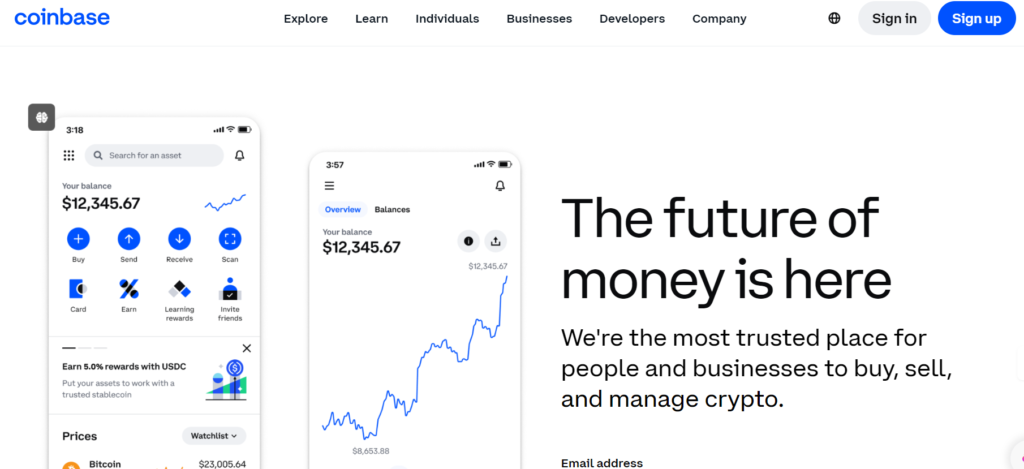
Coinbase, for instance, is a platform for buying, selling, and managing cryptocurrencies, offering secure and user-friendly services for individuals and businesses globally.
Coinbase supports more than 100 countries and holds $130 billion in assets, making it the trusted cryptocurrency exchange. It provides resources and support to help users navigate the world of crypto.
Coinbase Global (COIN) achieved a net income of $1.17 billion, marking its highest figure in nine quarters, alongside a 115% increase in net revenue compared to the year-ago period.
23. Robo-Advisors
Robo-advisors offer automated, algorithm-driven financial planning services with little to no human supervision, making investment management accessible and cost-effective for a wide range of investors.
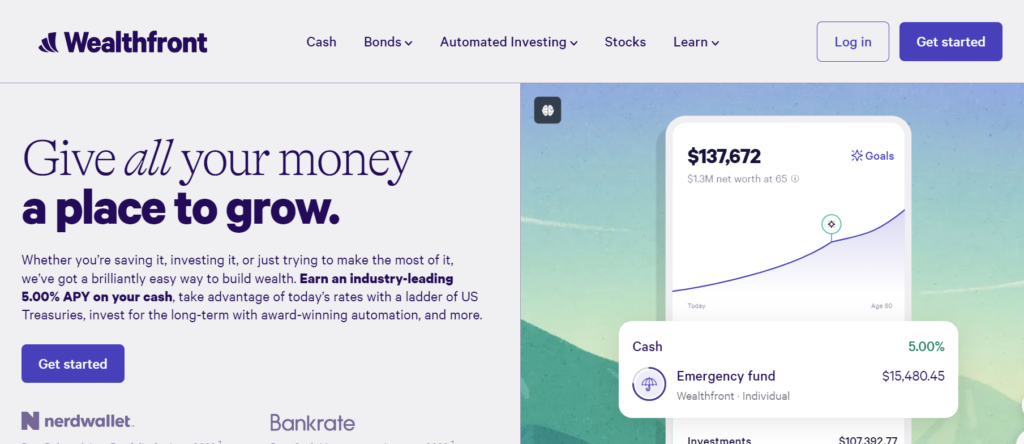
Wealthfront, for example, provides automated investment management and financial planning services. It utilizes algorithms to build and manage diversified portfolios for clients.
It also offers high-interest cash accounts and financial planning tools. The company manages over $25 billion in assets and is recognized for its innovative approach to financial management. Wealthfront has raised a total funding of $205M over 6 rounds.
24. Peer-to-Peer Lending Platforms
P2P lending platforms connect borrowers directly with investors, bypassing traditional banking institutions and offering potentially higher returns for investors and lower interest rates for borrowers.

LendingClub, to illustrate, is a leading P2P lending platform that facilitates personal loans, business loans, and auto refinancing. It connects borrowers with investors through its online platform and has raised a total funding of $219M over 14 rounds.
LendingClub facilitates personal and business loans by connecting borrowers with investors, having issued over $60 billion in loans.
25. Buy Now, Pay Later (BNPL) Services
BNPL services allow consumers to make purchases and pay for them in installments, often interest-free, enhancing purchasing power and providing a flexible payment option.
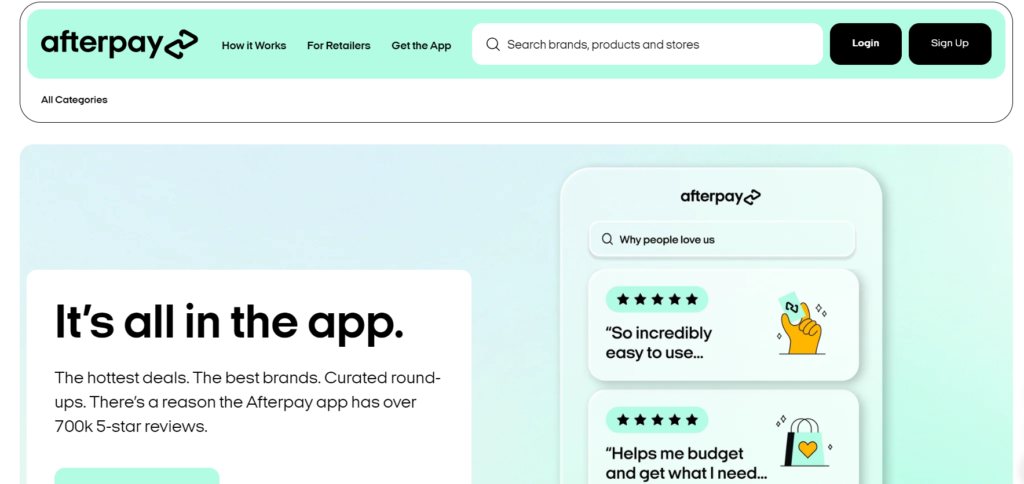
Afterpay, for instance, is a BNPL provider that allows consumers to split their purchases into four interest-free installments. Afterpay integrates with major Ecommerce platforms.
The global buy now, pay later market was valued at $256.54 billion in 2022 and is projected to reach $3892.19 billion by 2031, growing at a CAGR of 30.5% during the forecast period (2023-2031).
Which Businesses Make Billions?
Many businesses make billions of dollars in revenue across various industries with strong brand recognition and strategic business decisions. Here are the top 5 biggest companies in the current market.
Microsoft and Apple lead with market caps of $3.332 trillion and $3.322 trillion, respectively, reflecting their dominance in technology services and electronic technology.
NVDACL, another major player in electronic technology, has a market cap of $3.244 trillion. NVIDIA follows closely with a market cap of $3.222 trillion, showcasing its strength in the semiconductor industry.
Alphabet, with a market cap of $2.199 trillion, rounds out the top five, underscoring its significant role in technology services and digital advertising.
Parting Tips on Building a Billion-Dollar Business
In a YouTube video, Garry Tan, CEO of Y Combinator, shared some insights on billion-dollar startup ideas. Leaning on a Steve Jobs speech he reckons that you “have to have different experiences”—not novel ideas. He goes on to share some examples of founders who had unique experiences.
He goes on to quote Paul Graham’s 2012 essay on startup ideas, “Work on hard problems, driven mainly by curiosity, but have a second self watching over your shoulder, taking note of gaps and anomalies.
“Give yourself some time. You have a lot of control over the rate at which you turn yours into a prepared mind, but you have less control over the stimuli that spark ideas when they hit it. If Bill Gates and Paul Allen had constrained themselves to come up with a startup idea in one month, what if they’d chosen a month before the Altair appeared?”
For context, Altair Basic became a huge hit. The company they made ended up becoming Microsoft.
Join Bot Memo today for insights and strategies to help you build your own billion-dollar business with innovative ideas that can propel you to the top.